This is my second presidential election season as a 5th grade teacher and third since I started teaching. I can still remember that morning in 2016. I took the train uptown to Washington Heights, heart hurting for the third graders I would greet in my classroom. The train was so quiet. New York felt gray and sad, in mourning for the hopes we’d had, in disbelief at what was to come. It was like a somber layer, blanketing everything.
In 2020, I was at home, teaching remotely. When Georgia turned blue, I flew out to the streets, cars honking, screaming an exasperated “YES!” Later that evening, I followed the cheers into Central Park where there was a celebratory roller disco happening.
Election season is different this year. I live in Miami, in the heart of a not-really-swing state. I have to bite my tongue when certain topics get brought up, and dig my heels in when others do. Still, it feels like there’s some hope, especially after the change in the summer.
But my own political views are not what I came here to write about, and they’re certainly on display in my classroom. That said, politics comes up in our classroom every day.
As defined in Usborne’s Understanding Politics & Government, an excellent informational comic book about the topic, politics “actually covers the way people make decisions about how to work together in all kinds of groups, big or small.”
Politics comes up when the students share that they’re starving before lunch and can’t concentrate on reading, so we decide to swap reader’s workshop and read aloud and bring an extra fruit from our early snack to munch on when we start to feel the hunger pangs. Politics comes up when the students vote on whether we should stay indoors for recess or risk going out when there’s a dark looming cloud over the playground. Politics comes up when one student tells her friend that Kamala Harris would be the first “Black woman president” and the friend replies, “the first WOMAN president at all!”
In Reggio Emilia-inspired schools, we follow the children’s lead, listen to their theories, and give them the tools to prove or disprove those theories. As teachers, we keep in mind the skills they need to practice and the main content they need to know before they move on to the next grade. We go deep, instead of broad.
The presidential election is happening, and our students are hearing about it. It’s important that they understand the basics of our government, their rights and responsibilities as citizens, and how an election works.
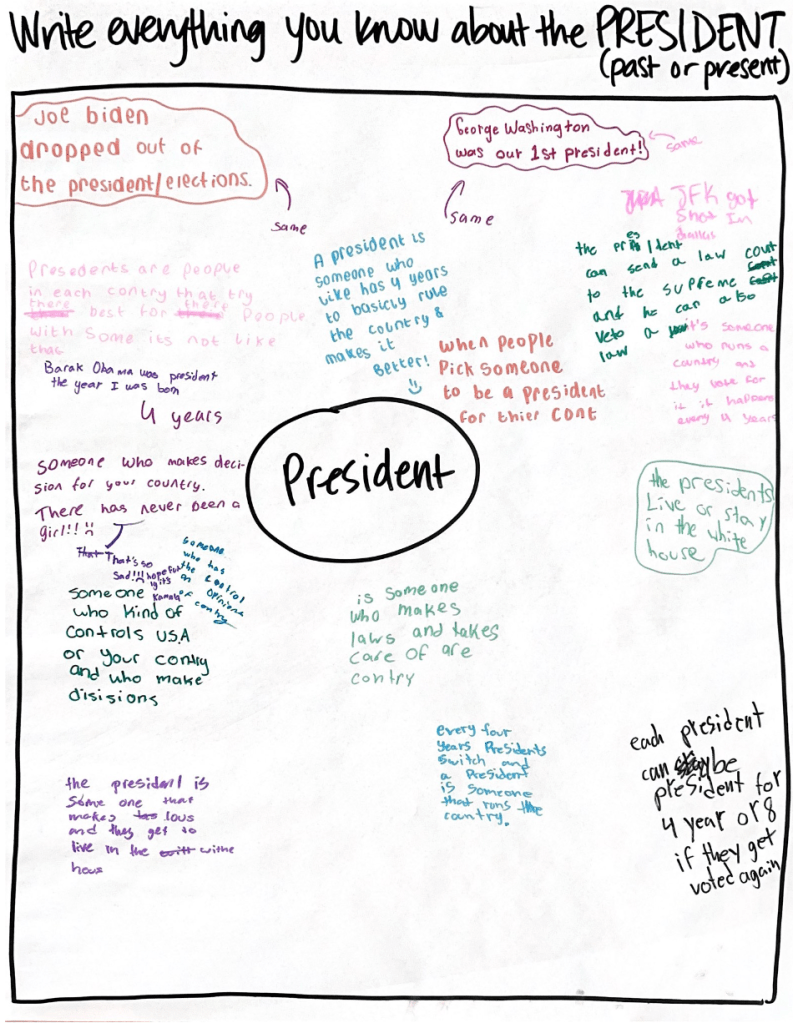
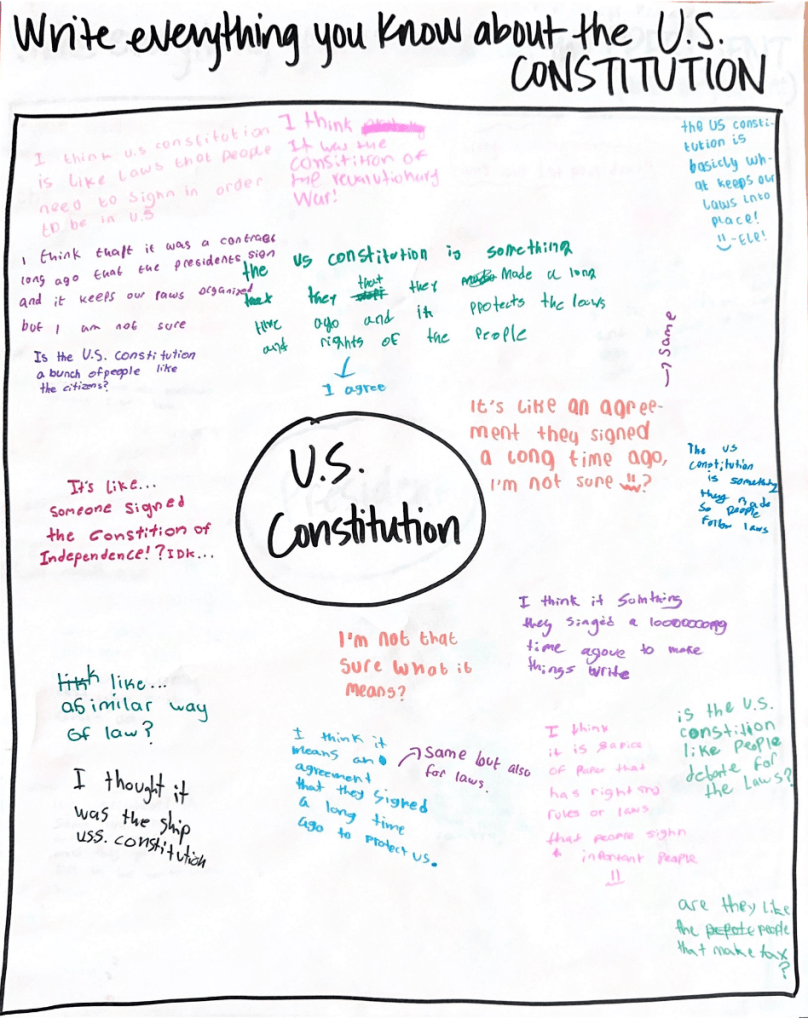
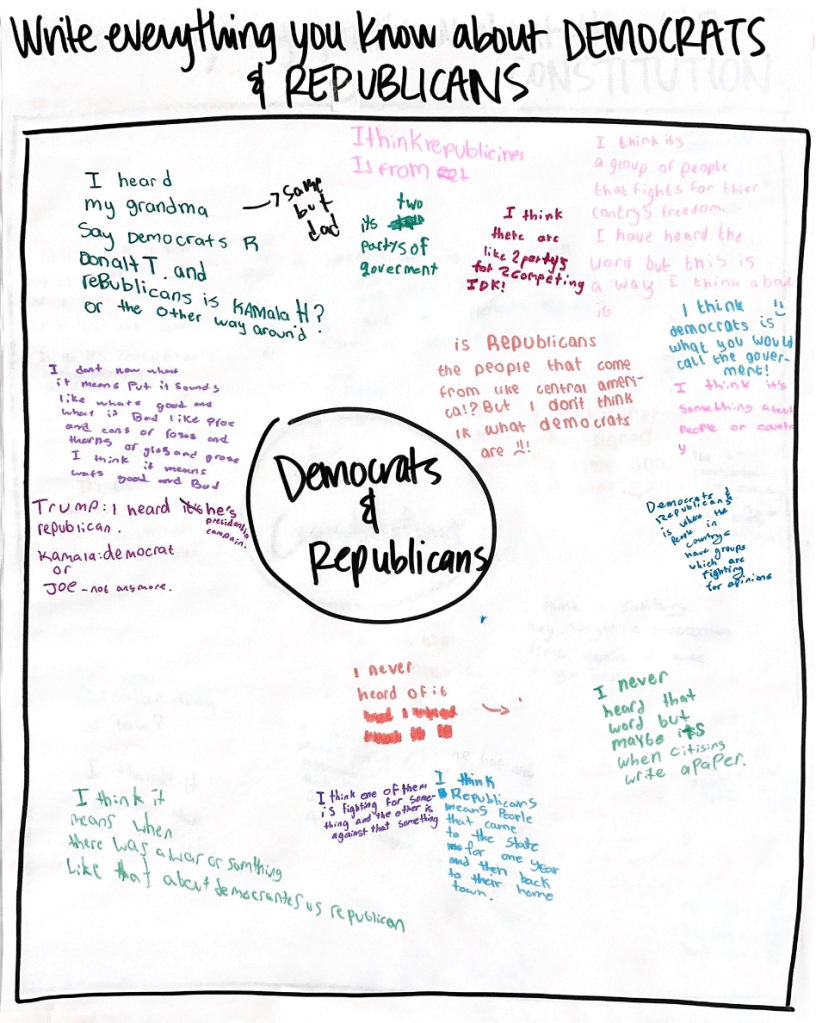
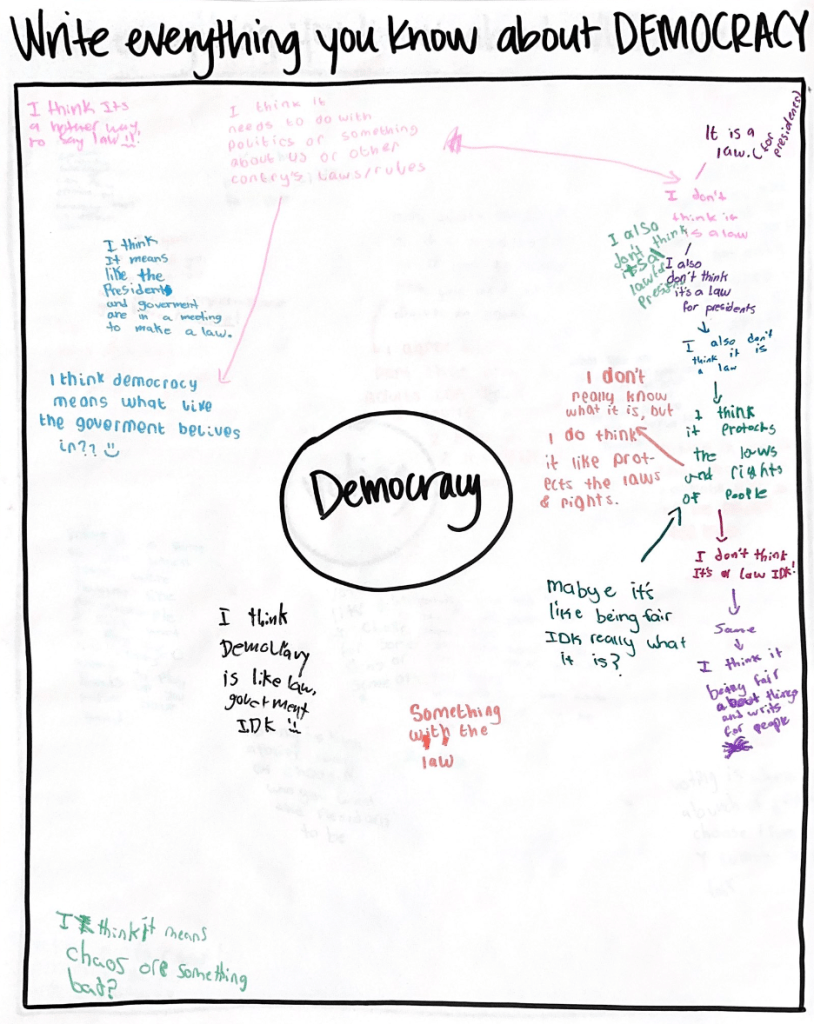
But we start with what they know. So yesterday, we did just that.



 Writing With Abandon
Leave a reply to Amy Crehore Cancel reply