Writing With Abandon

Reflections and ramblings about life as an educator, writer, reader, knitter, and over-thinker. Trying to do the writing only I can do.

Tag: Xavier Cortada

  • Planning for Project Based Learning: Becoming a Teacher-Researcher and Building Your Own Expertise

    In October 2020, Natalie and I presented at Bank Street’s Language Series. The theme that year was Anti-Racist Language Teaching. Our workshop, “Taking an Anti-Racist Stance as a Teacher-Researcher” focused on the question: What stories need to be told in the community where I teach and how will I center them?

    Natalie and I are both white teachers who, at the time, were teaching dual-language in The Bronx (Natalie still does). In our workshop, we got vulnerable and spoke about our status as outsiders to that community — Natalie is from Ohio, and I grew up in Manhattan, which may as well be worlds away from The Bronx. We discussed the strategies that helped us get informed, with the aim of doing soul-affirming, language-rich, student-centered social studies. Learning the history of the South Bronx changed our vision of the neighborhood, correcting our deficit/racist views. We crafted a unit that privileged community voices, shrinking our presence and promoting the agency of students. Our goal with the workshop was to provide participants with tools to start similar journeys. My goal with this post is to give my readers those tools as well.
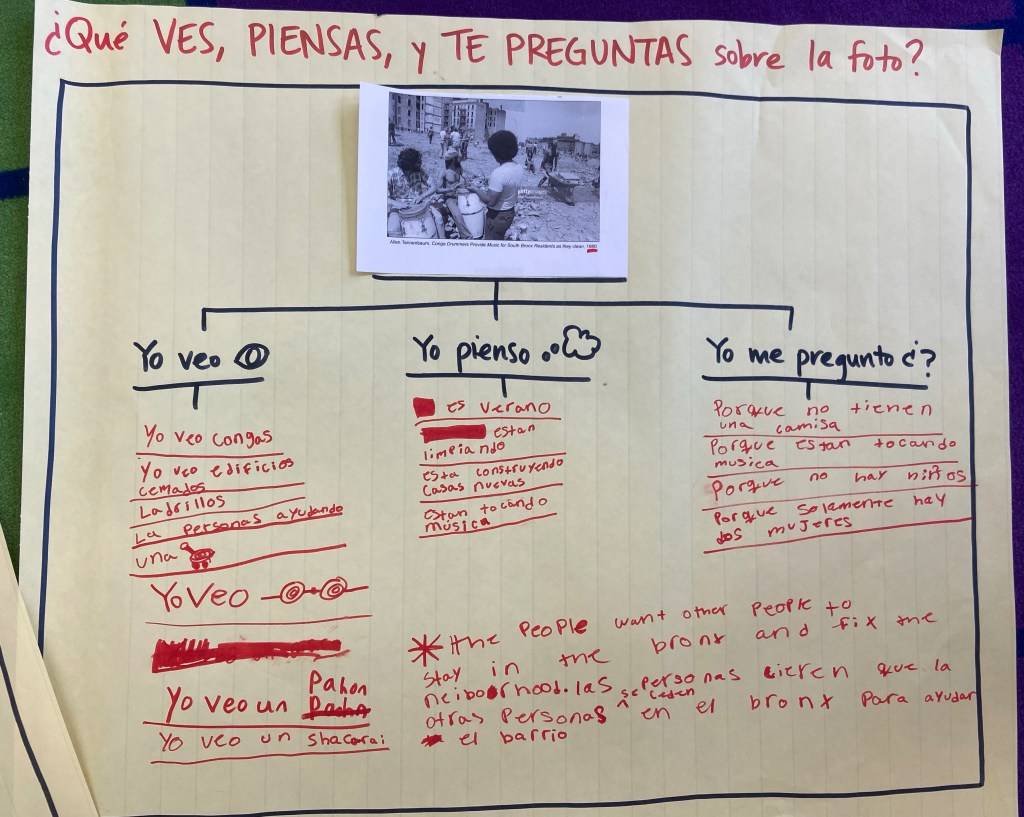
    Our fifth graders discovered how community members came together to rebuild The Bronx

    The Importance of Teacher-Research for PBL

    I believe that becoming a teacher-researcher and building your own expertise, particularly if you are an outsider to a community (and even if you have been living in the community your whole life!), is essential not just for anti-racist teaching, but also for PBL. In order for projects to take on a life of their own through student interest and “unexpected detours,” as my coworker Lizzie calls them, teachers need to be knowledgeable about the content and flexible enough to facilitate this learning, no matter the direction the detour may take. This doesn’t mean you need to be an expert or prepared for 100 different scenarios, but it does mean you should have a good amount of knowledge under your belt to feel comfortable answering student questions and guiding them towards next steps.

    For me, moving to Miami meant I was, yet again, an outsider. For this unit, I knew I wanted to teach about South Florida’s ecosystems, but I needed to learn about them first. I had a lot of questions: What’s a mangrove? Why is the Everglades so special? Isn’t it just flat swampland? Is Miami doomed to be underwater in the next few years?

    I got to work. 

    Research Strategies for Getting Informed

    A successful research project uses multiple sources and multiple types of sources. Here are some that are my go-to’s for teacher-research:

    • Books
    • Photo trove (many libraries and museums have digital collections; you can also find specific photographers’ projects or exhibitions on artists’ or museums’ websites)
    • Podcasts
    • Talks at local universities
    • Museums
    • Interviews with community members
    • Newspaper and magazine archives
    • Community and nonprofit organizations
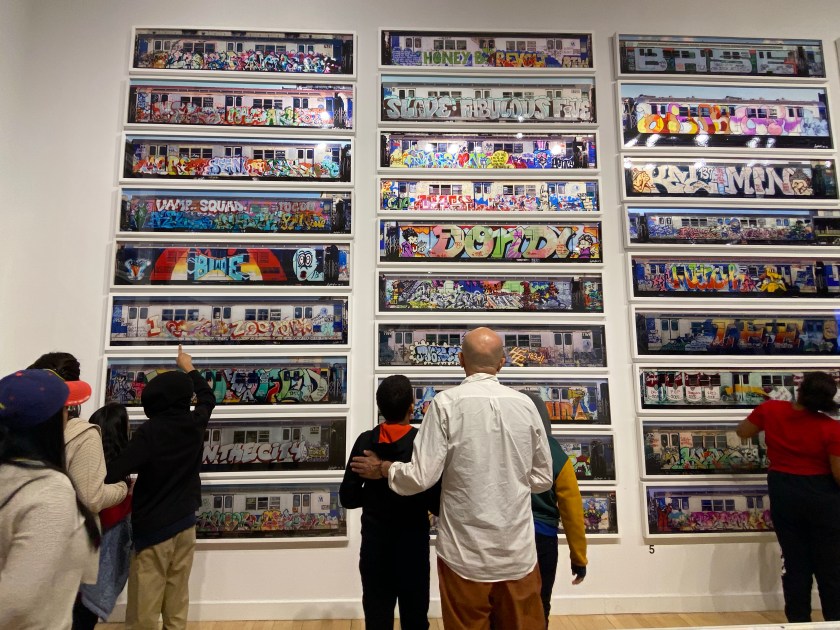
    The Henry Chalfant exhibit

    For our Bronx community project, I pored over photographs from the NY Public Library Digital Collections of our school neighborhood in the 40s, 60s, and 70s, finding intersections that we’d be able to place on the map and juxtapose next to photos of what stood there today. I geeked out over a three-part episode from The Bowery Boys about the history of the South Bronx. The Bronx Museum of the Arts had an exhibit with Henry Chalfant’s photographs of the graffitied trains from the 70s and 80s, so we booked a field trip. Natalie, Bryan, and I attended a talk at MCNY to learn about the Young Lords.
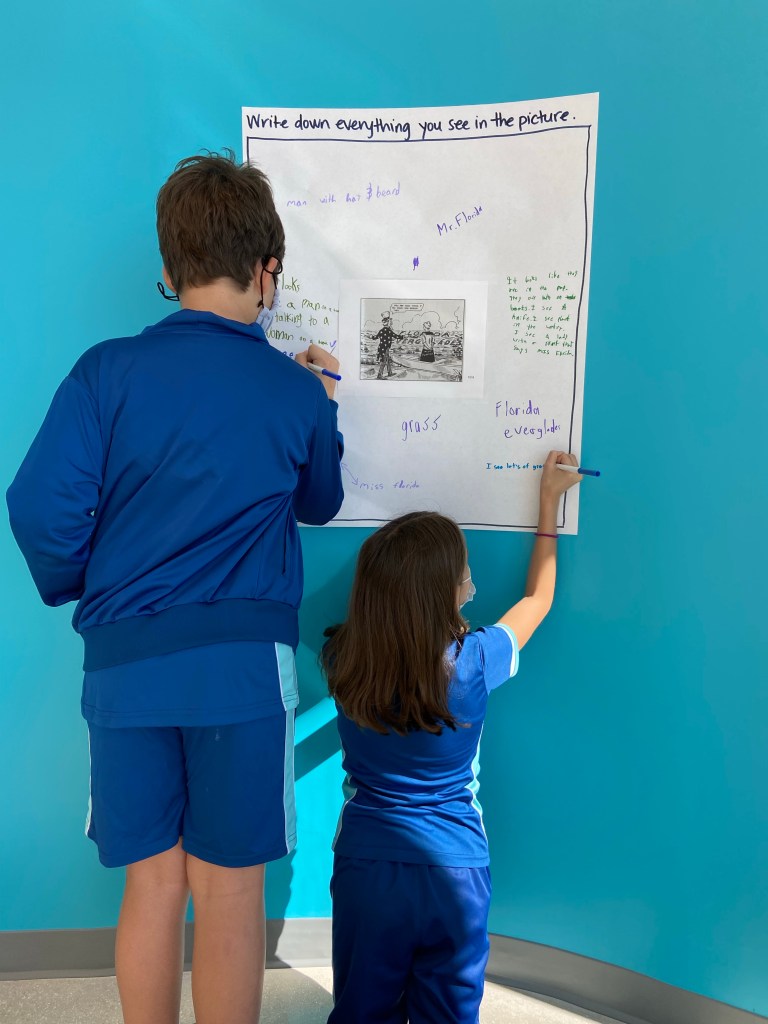
    Here in Miami, I ordered a few books to learn more about the history of the Everglades: River of Grass by Marjory Stoneman Douglas and The Swamp by Michael Grunwald, as well as a bunch of picture books for interactive read aloud. I found blogs with old political cartoons and photos, some of which I used for our first provocations. I followed community and nonprofit organizations on Instagram and reached out to some of them for interviews and field trips. I also talked a lot with my coworkers who grew up in South Florida (shout out to Estelle and Josue). 

    The Beauty of Place-Based Learning: Discoveries for Both Insiders and Outsiders

    I think one of my favorite aspects of place-based PBL is that both insiders, who’ve lived in the community forever, and outsiders, who’ve either recently moved there or just commute there from another neighborhood, end up learning so much about their community. 

    We learned about the resilience and strength of the mangrove forests, and how the Everglades has so many different ecosystems within it. We literally got our hands dirty in order to see this for ourselves.

    5th Graders climb up a red mangrove’s roots in Key Biscayne

    At the crossroads of Brickell, Little Havana, and The Roads, our school sits alongside I-95, where Xavier Cortada and his 800+ volunteers painted the Miami Mangrove Forest, which we all see every day as we come to work, but never knew the story behind.

    We built relationships with organizations that are fighting for the survival of Miami’s ecosystem well into the future, for the benefit of plants, animals, and humans who call Miami home. 

    Every day that I live and teach here, I grow a deeper appreciation for this city. Through this project, I have gained more faith than before that it will continue to thrive. Watching the fifth graders present to the younger students about mangroves and why we should care about them showed me that they have too. 

  • Planning for Project Based Learning: Depth Over Breadth

    When my husband and I decided to move to Miami, I was sure about one thing: whichever school I taught at would need to embrace inquiry, integrated studies, and project based learning. I was lucky to find KLA, which has allowed me the same creative freedom that Samara did in designing curriculum that is meaningful and relevant for my students. 

    The way I approach project based learning is heavily influenced by my time at Samara and the professional development I received while teaching there, as well as by what I’m seeing and learning at KLA with its Reggio-inspired model. 

    My first Samara 5th graders observe a photo of their Bronx neighborhood in the 1970s, when The Bronx was burning

    A disclaimer: I am in no way an expert on project based learning. I do, however, think I have a knack for it. Planning projects is fun (if you’ve ever planned one with me, you know how excited I can get), and it’s probably the only part of planning that never truly feels like work, because I am learning so much in the process. 

    I know that I’ve learned the most about effective teaching through other teachers—talking to them, observing them, reading their blogs/social media. So my goal is to document and reflect on my planning process here in bite-sized blog posts, in case it helps anyone out there.

    What is Project Based Learning?

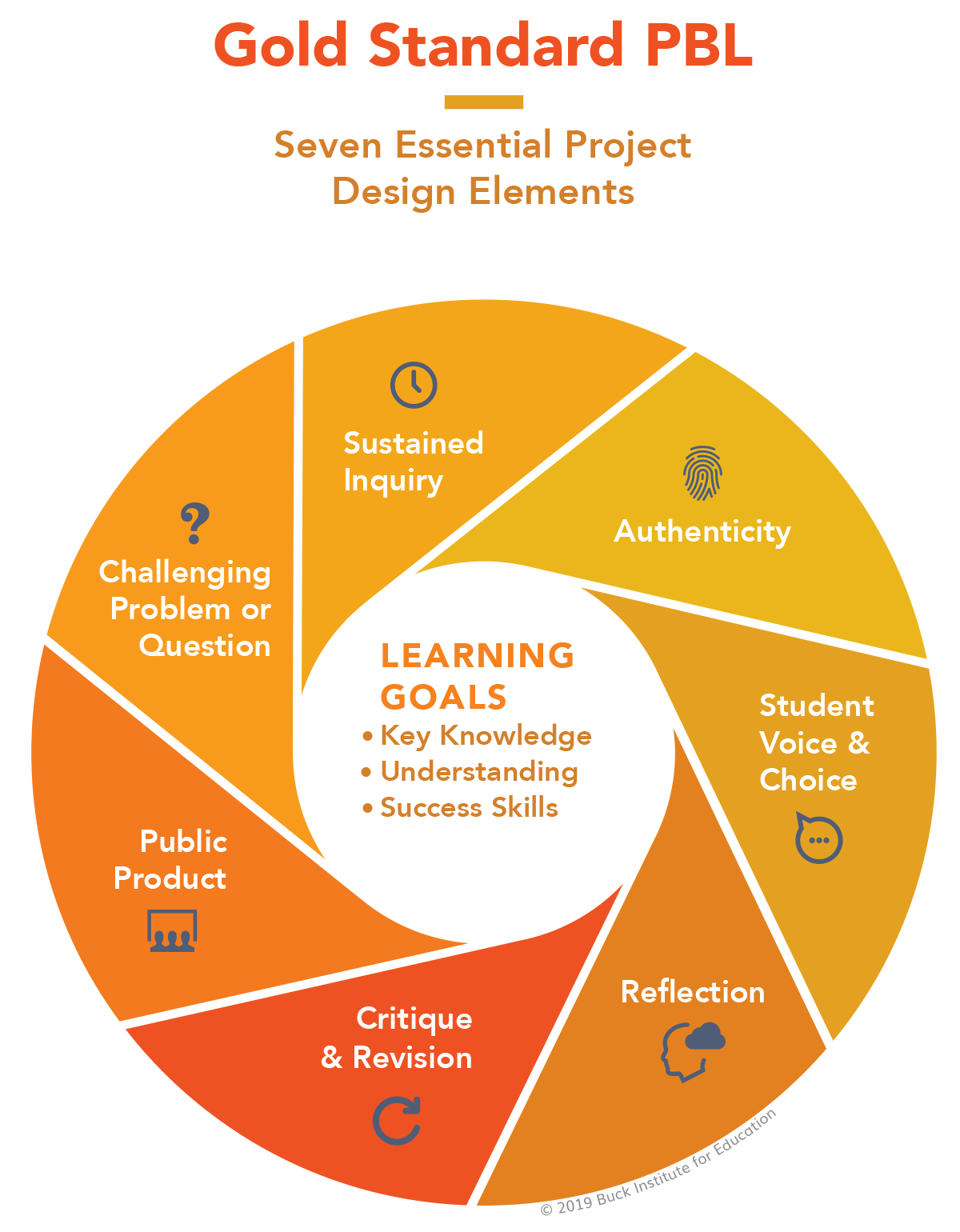
    Before I launch into this blog series, it’s important that we ground ourselves in a definition for project based learning. PBLWorks, the leading provider of professional development for project based learning, defines project based learning as “a teaching method in which students learn by actively engaging in real-world and personally meaningful projects” (pblworks.org). That said, project based learning (PBL) is NOT simply “doing projects.” I particularly like this explanation from their website: 

    “We find it helpful to distinguish a ‘dessert project’ –  a short, intellectually-light project served up after the teacher covers the content of a unit in the usual way – from a ‘main course’ project, in which the project is the unit. In Project Based Learning, the project is the vehicle for teaching the important knowledge and skills student need to learn. The project contains and frames curriculum and instruction.”

    PBLWorks
    Seven Essential Project Design Elements – PBLWorks

    I was lucky enough to receive a full day of professional development from PBLWorks before leaving Samara, and I still have a lot to learn from them, particularly in terms of assessment and student reflection, critique, and revision. I already know these are my next steps as I look toward planning future PBL units. Onward.

    Depth Over Breadth

    One of the first things I learned at Samara about PBL is the idea of valuing depth over breadth; when you decide to do thematic units or projects, you simply have to give up the idea of being able to teach everything. 

    This can be a tricky concept to swallow.

    But I have to teach all the things!

    Take a look at any social studies or science scope and sequence and you’ll see what I mean. There is so much that states and cities and districts want you to teach in a single year for a single subject that it can be overwhelming, if not downright impossible. The teachers who do try to cover it all usually end up sacrificing depth in favor of breadth—students get a little sprinkling of everything, but don’t get a chance to linger and build their expertise. Not very effective.

    With PBL, we want students to think critically, problem solve, collaborate, and communicate their newfound understanding in meaningful ways. This means we need to go deep.

    Where to Begin

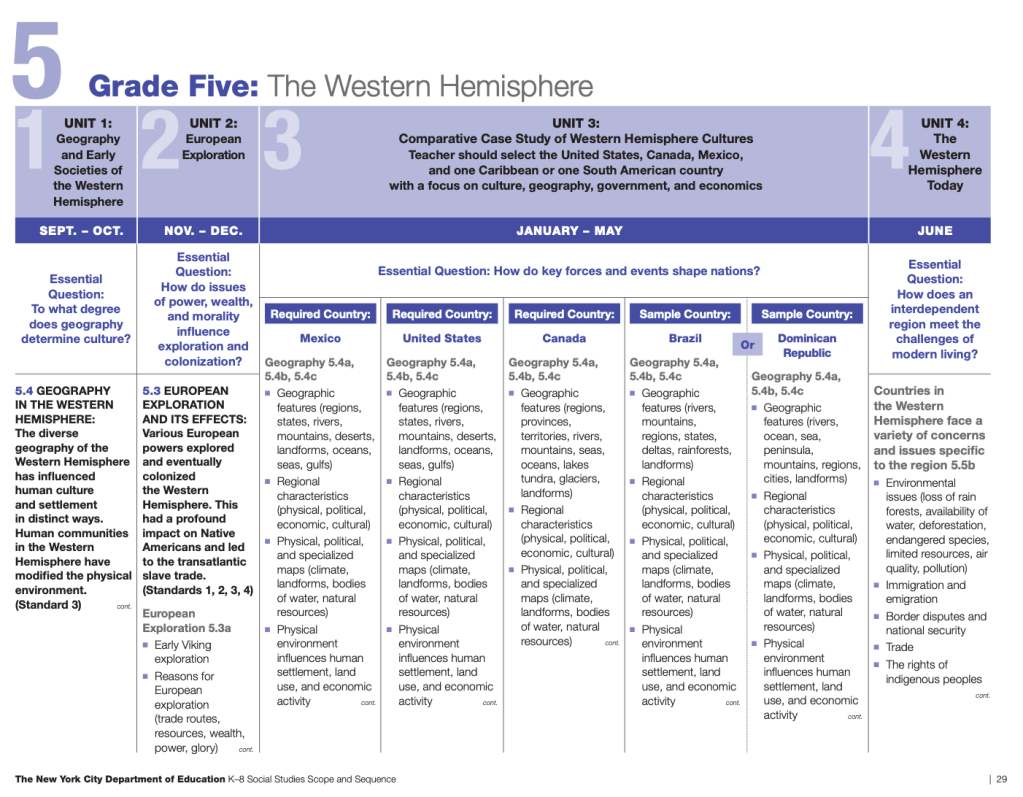
    I like to begin by looking at the standards and the scope and sequence. NYC has a beautifully designed, easy to understand social studies scope and sequence. Florida? Not so much. Either way, get familiar with what your state wants students in your grade to learn. Focus on science and social studies, as these are the subject areas that often get “sprinkled” throughout the school day/year, pushed aside in favor of literacy and math, which are absolutely necessary in the primary grades.

    NYC Social Studies Scope and Sequence for 5th Grade

    Once you’ve gotten an idea of the standards, look inward:

    What do you see in the scope and sequence that you are passionate about?

    If you’re passionate about something, it will be contagious — others will get excited about it because you are.

    Next, look at your students:

    What do you see in the scope and sequence that they are or might be passionate about?

    Get to know your kids really, really, really well. What questions have they already asked that connect to these topics? What are their interests, their passions, their strengths?

    Finally, look at your community:

    What issues in your neighborhood/town/city relate to the topics you and your students are passionate about?

    I’ve found that project based learning is most effective and meaningful when it’s place-based too. What resources exist in your community to bring this learning to life?

    Starting with a Seed

    Here’s how I followed this for our current unit of study.

    • What do I see in the scope and sequence that I’m passionate about?

    I am passionate about the environment and combatting the effects of climate change. I see this in the Florida State Standards SC.5.L.17 about Interdependence. 

    • What do I see in the scope and sequence that my students are passionate about?

    Many of my students love animals and wildlife. Some of them who moved here from another state have asked why our school doesn’t recycle. Most of them love being outside and are very active.

    • What issues in my neighborhood/town/city relate to the topics we are passionate about?

    Miami is a city built on top of what was once part of the Everglades. Climate change is impacting Miami immensely because of sea level rise. Lots of flooding issues. There are many organizations working to combat pollution of Miami’s beaches. However, there’s a lack of easy/cheap recycling, and hardly any composting.


    I had the seed of an idea for the unit. Now I just needed to start planning for it. To be continued.

    An installation of mangrove propagules in our classroom window. We are currently participating in Xavier Cortada’s Plan(T) project as part of the community engagement portion of our project.