
It’s September and we’re about to head into the 5th week of school. Routines are falling into place, the students are beginning to feel more comfortable with one another and with us teachers, and the amount of work we have to do goes back and forth between feeling manageable and never-ending, all at the same time.
I feel lucky to be teaching 5th grade for the fourth year in a row, with a new crop of students in front of me, a whole extra year of teaching 5th graders like them behind me, and an amazing co-teacher by my side. Each year with the same grade, I get to reflect, revise, and take another stab at teaching that subject/topic/unit that I didn’t get right the first time.
Take, for example, our next writing unit. It’s a unit that I taught last year — The Arc of Story, Realistic Fiction — one which… didn’t go as intended. It was my first time planning and teaching a published Writer’s Workshop unit, and there were MANY things that I ended up wishing I’d done differently. I had some wins (learning how to craft teaching points & active engagement for the mini-lessons), but I mostly focused, as I tend to do, on the shortcomings (I barely conferred, and most students wrote 15+ page stories that weren’t focused and that they didn’t have time to revise).
I’m energized by the chance to reteach this unit. For one thing, Ana’s going to be teaching it to 4th grade as well, which means we’ll get to put our heads together to brainstorm and rework lessons as we go. For another, I am coming at the unit with more confidence as a writing teacher and a clearer idea of how I can make the unit successful for my students and for me.
Goals for the Unit
The pitfalls from the last unit were clear, and the data from this group’s on-demand narratives supports them. So, I’ll be aiming to teach towards the following goals:
- Focused short story arcs — 2-4 scenes, clear problem, clear resolution
- Transition words
- Show, Don’t Tell — specifically through (properly punctuated) dialogue and vivid description of setting and character
Game Plan
My game plan for tackling these goals includes:
- Choosing mentor texts that clearly show off a command of the aforementioned skills, and referring to them consistently throughout the unit (both in mini-lessons and conferences). Last year, I used two picture books, but they were a little too long. I want the fifth graders to be able to see structure and scenes easily, and so some simple short stories are what’s needed. The two I’m going with are “Min Jee’s Lunch” by Elizabeth Kleinrock and “Eleven” by Sandra Cisneros.
- Writing my teacher mentor piece ahead of time and ensuring that it also demonstrates and reflects the type of writing I want my students to be able to produce. Last year I tried making my piece follow the same structure as the example in the teacher’s guide. This year, I’m going off of my own seed ideas and thinking about the students I have in our classroom. Who are they? What will they relate to? How can I make sure that my piece is short and focused, just like I want theirs to be?
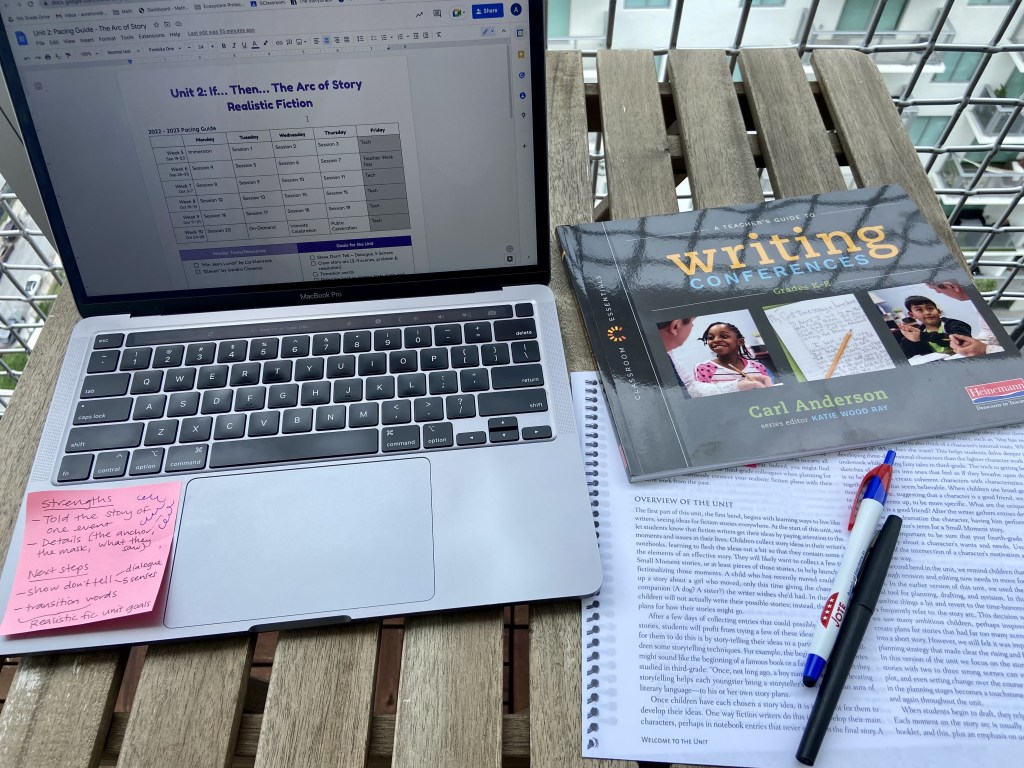
- Creating a schedule for conferring with students one-on-one and in small groups so that I can keep track of what they’re writing and give them feedback before it’s too late. I didn’t start conferring with students until the third unit of writing last year, because I was still getting the hang of planning the mini-lessons. My students would have benefitted greatly from me reading their writing and meeting with them about it more regularly. (This is partly why some students wrote such long pieces — I didn’t catch them until it was too late.) I bought the new A Teacher’s Guide to Writing Conferences by the one and only Carl Anderson and am already digging into it. It’s a fantastic resource with tons of digital resources and videos of Carl in action.
Staying Accountable
I’ll try to hold myself accountable by checking in on the blog each week. Let’s see how it goes!
Now, back to planning.





 Writing With Abandon