Writing With Abandon

Reflections and ramblings about life as an educator, writer, reader, knitter, and over-thinker. Trying to do the writing only I can do.

Tag: growth mindset

  • A Friday Slice

    “Are you going to do the Slice of Life Challenge this year?” Ana asked me this morning as we passed each other in the halls. “Male and Angie are gonna do it, and Gi too.”

    “I don’t know…” I skirted. This year’s intention to slice every Tuesday started out strong and then waned in the fall as I dealt with some personal health issues. If I couldn’t commit to doing it weekly, how could I do it daily?

    *

    Later, when we met in my room, she mentioned it again.

    “I just sent an email to the second grade team. Darlyn is in!”

    “Maybe…” I smiled. We returned to the writing plans. I shared something funny a student had said about me moving the teacher’s desk.

    “That’s a slice!” Ana exclaimed.

    “Should I just write it and schedule it for March 1st?”

    “YES!”

    *

    At 3pm, while I was waiting to meet with Male, Ale left Ana’s office and Ana shouted, “Ale’s gonna slice, too!”

    “Okay, okay,” I laughed. With this many new slicers from our little school community, surely I could get motivated enough to slice again each day for the month of March. It was tough last year, but it was also fun and satisfying, connecting me not only with other slicers but with friends and family (hi, Mom!). Plus, I have a little time capsule now that captured a joyous month in my life when, among other things, I was falling in love.

    So, here it is. Today’s slice. Never mind that it’s a Friday:

    *

    This morning when I entered the classroom at 7:48am, I had visions of the documentation that would start to emerge on the bookshelves as I cleared them. But something wasn’t right. The table by the window always got in the way, and the chairs were all different sizes. There was all this dead space near the teacher table, too, and the math materials were blocked off and inaccessible to the students.

    So, I did what I always do when I realize the layout of the classroom doesn’t align with how we’re using it — I started rearranging.

    First order of business: moving some of the writing charts. Next? Swapping the teacher table with the long one at the window.

    The first students arrived at 8 to find me and all of our tables and chairs scattered.

    “Good morning!” I shouted.

    “Um, hi? What’s going on?” Two of the girls asked.

    “I’m rearranging the furniture. Help me!”

    “Okay!” They agreed. These two are always up to help with anything.

    “Is this table going to stay on the rug?” The other girl asked, skeptical.

    “No, no,” I assured her. “It’s just there while we get the rest sorted.”

    Then two of the boys arrived.

    “Happy birthday!” I said to one of them who turned eleven today. “Help us move these smaller chairs to the other room and grab all the big ones to bring in here?”

    They set off on their task as a few more students arrived.

    “We’re rearranging everything!” One of the first girls explained.

    “Why?” A student yawned.

    “I don’t know! For a change?”

    “Because Ms. Amy was doing it when we came in!”

    “But Ms. Amy, it’s so sunny over there! You’re going to fry like a grilled cheese!”

    “I liked it better before.”

    “Yeah, what about all the other teacher stuff that’s still over there? It’s so far away from your desk now!”

    Once everything was moved, and we were mostly satisfied with their placements, we gathered for Morning Meeting.

    I explained to the fifth graders that I got the rearranging “itch” from my dad. When I was growing up, he always moved around the furniture in our combined living room/kitchen/dining room. I’d wake up and come out to see things in different places. It would be a bit of a shock to the system, and then I’d get accustomed to it. Ever since, I have constantly rearranged my dorm rooms and apartments to whatever felt right. And I always found that rearranging gave me a refreshed feeling, a sense of starting anew.

    I’ve found that with classrooms, even the same one, once you see how the students of that year are using the space, it often becomes clear how best to arrange the furniture. (And it’s apparently good for their brains to have that change!) Sometimes you only need to rearrange once. Sometimes more! (Like last year, which one of our students hated, but Kim loved.)

    A half hour later, as we were teaching math, Sol came in and widened her eyes. She walked over to the desk.

    “I rearranged!” I said.

    “I see that,” she laughed. “Are you trying to slow cook us?” She asked as she shaded her eyes from the sun beaming in through the window.

    “Seriously, Ms. Amy,” M said. “Yesterday, this was you: ‘Oh my god, the window is so hot, we need to move things away from the window.’ This is you today: ‘I think I’ll put my desk by the window. Yeah, good idea…’”

    He’s not wrong, but I’ll give it a chance. I think it will work.

  • A Better Reading Teacher

    My hope and dream for 24-25

    This year, my ninth year as a lead classroom teacher, is the year I want to tackle reading. My first few years in the classroom, I focused on dual language learning, math, and classroom management. Then, project based learning followed by writer’s workshop.

    Every year I’ve held off on reading. I’ve dabbled in it, I’ve led interactive read aloud and book clubs, I’ve ensured access to books and (mostly) protected independent reading time. But reading instruction? It’s always been a struggle. First, because I was teaching in dual language classrooms, later because it was just one more thing on top of all the other stuff I was doing.

    And mainly, because it just felt hard! Reading is something I love, but I don’t know how to teach, at least for upper elementary. Upper elementary is challenging, because we don’t get the training in phonics to help teach our students who have gaps. The students who are still learning TO read, and aren’t yet ready to confidently use reading to LEARN.

    But it’s time. I have to face it.

    So this year, my goal is to become a better reading teacher. This will include designing and developing reading units that are aligned with our new power standards, as well as implementing age-appropriate small group lessons for those students who need fluency and decoding support.

    We started by designing a launching unit to get the students excited about reading. The lessons included: cuing students to notice that we see reading EVERYWHERE; asking students to get curious about how they and their grownups learned to read; sharing some of the science of reading for students; sharing some fun reading history facts so students could realize how reading is a privilege; and helping students take ownership over their reading journals and the why/how of talking and writing about their books.

    Ana jokes that we should sell the unit, and I shake my head, but then I think, maybe we should! Because excited about reading? They most definitely are.

    Student jots, later categorized. My favorite has to be the Twilight Gossip!
  • All The Things We Do

    Today after eating with Kim and Ana and talking about reader’s workshop and writing conferences, I fell into a deep “I’m a terrible teacher” mindset.

    “I haven’t conferenced. I’ve sucked at reading their work,” I texted Ana. “And now I feel bad that they’re not reading daily, but we can’t change the routine again this year.”

    She grabbed me as we passed in the cafeteria: “I was literally having the same thoughts yesterday in the shower.”

    Then she suggested making a list of everything we are doing, so we can see where there’s wiggle room. What can we knock off our plates so we can do this?

    “But I also like my work-life balance this year,” I told her. “And I don’t want that to change.”

    I walked over to Kim and opened a new document on my computer.

    “I want to make this list, but also so we can see that we’re actually doing a lot.”

    “We do SO much. I love this idea,” Kim agreed enthusiastically. “I used to do this for parenting, too.”

    I appreciate Kim’s enthusiasm for all the things.

    So I started typing as we both shouted things out:

    ///

    ALL THE THINGS WE DO

    • Prep the materials we need for that day (copies, manipulatives, charts, post-its)
    • Plan lessons and units (writing, reading, read aloud, math, investigations, SEL, word study, sentence study, morning meetings, closing circles, integrated projects)
    • Create anchor charts for various lessons and units
    • Check and give feedback to their math work
    • Check and give feedback to HW
    • Email parents
    • Attend meetings during and after school hours (Hiring Committee, Literacy Committee, Tuesday PD, parent meetings)
    • Support students when they need help during independent work
    • Manage social emotional needs — conflict resolution, redirections, etc.
    • Transition them all over the school
    • Do mindful moments and brain breaks
    • Take them to snack and recess and lunch
    • Plan and execute field trips
    • Plan and rehearse for graduation / end of year things (middle school panel, blast off week, graduation rehearsals, etc.)
    • Write, direct, and produce a 5th grade show, which included rehearsals daily for the weeks leading up to it
    • Give kids band-aids (physical and emotional) when they need and clean poop off their shoes after recess sometimes
    • Collaborate with coworkers to do integrated learning
    • Do mentorship ALL THE TIME (sometimes formal meetings, sometimes informal, always happening constantly)
    • Take our own mental breaks (at our lunch and recess)
    • Brainstorm together constantly
    • Put out fires as they come up
    • Meet every other week with Male
    • Make each other laugh so hard we cry
    • Create partnerships and groups for collaborative work
    • Shepherd the children like wayward sheep at the end of the day
    • Manage time all the time (it’s like I have a TimeTimer living inside of me)
    • Manage arrival and dismissal (20 mins in the morning + 20 mins in the afternoon)
    • Take verbal punches from the children daily #FifthGrade
    • Get and give hugs (and a little bit of lice)
    • Document everything! (photos, videos, audio recordings, transcribing, creating wall documentation – printing, cutting, putting it up)
    • Work with small groups
    • Check in with students one-on-one during independent work
    • Create and modify assessments
    • Create rubrics for assessments
    • Grade assessments and projects
    • Grade writing (unit work + on-demands)
    • Hold celebrations for writing that often include other teachers and students
    • Write positive compliment post-its for each kid, almost every week
    • Find games and other early finishers activities
    • Complete progress reports (cumulative grades, comments/narratives, inputting them into Google Slides, saving them as a PDF and schedule sending to parents)
    • Hold parent teacher conferences
    • Do F&Ps three times a year
    • Complete middle school recommendations
    • Administer MAP exams, then download and send the results to parents
    • Reevaluate and reassess how our teaching is going, then adjust and shift based on what we think is best (sometimes involving whole new planning and prep, such as for read aloud, reading stations, etc.)

    WHAT WE’RE NOT DOING

    • Writing conferences and small groups
    • Reading their writing notebooks / using them as much
    • Protecting indie reading time
    • Aligning our investigations to the social studies and science standards explicitly (general topics, but not the nitty gritty)

    ///

    I shared the document with Ana.

    “OMG YESSS. This is your slice today :)” was her reply.

    I may still be ending this day feeling like a worse writing teacher than I was last year. But I do recognize that I’m doing SO much. And I hope that anyone else who ever feels this way realizes that they are, too.

  • Arc of Story: Week 1 Reflection

    It’s Saturday and I’ve just finished planning the lessons for the second week of our realistic fiction unit and creating some tools to help my writers.

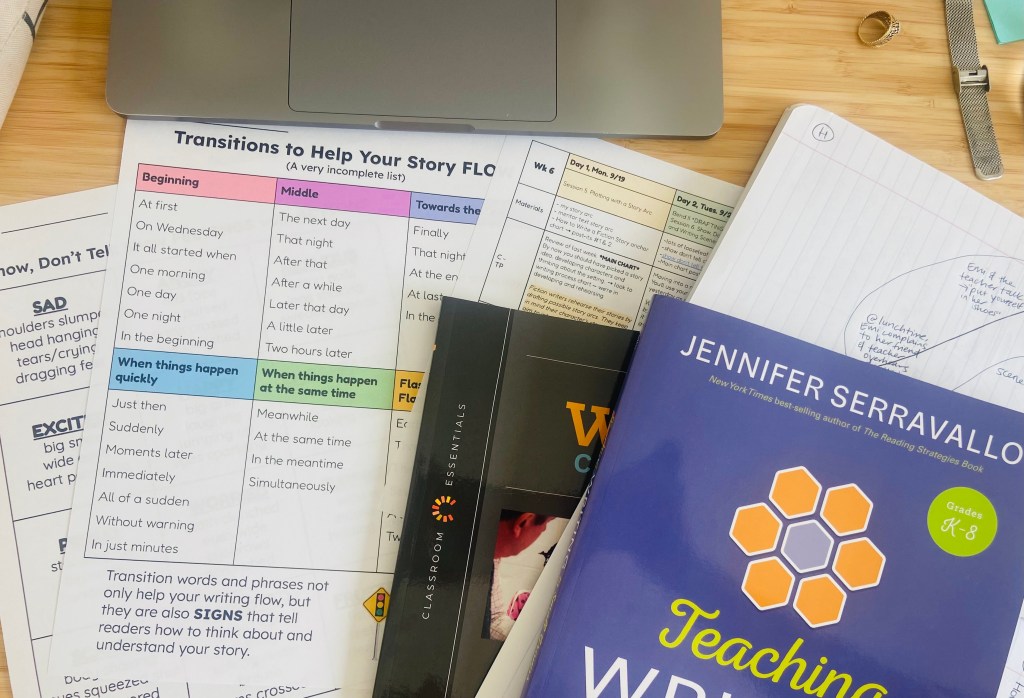
    Tools, plans, a story arc in my writer’s notebook, and my two handy professional texts.

    Mini-Lesson Breakdown

    This is the week where I’m going to attempt to really tackle each of my goals in mini-lessons:

    • Session 5 – Plotting with a Story Arc (I’ll be emphasizing the importance of just a few scenes, and how the problem can still intensify in such a short time period)
    • Session 6 – Show, Don’t Tell – Planning and Writing Scenes (I’ll introduce a show, don’t tell chart that includes examples of telling vs showing as well as dialogue; I’ll also provide students with a tool that Ana made to show feelings by using actions)
    • Session 7 – Feeling and Drafting the Heart of Your Story (This lesson is all about losing yourself in your story while you draft. Last year we did some envisioning, enacting, and drafting, but this year I’ll try having them ask themselves what the heart of the story is before/while they envision and embody their characters)
    • Session 8 – Using Transitions to Give Your Writing a Flow (While the first 3 sessions of this week are adapted from the TC unit, this lesson I created based on the needs of my students. We’ll take a look at the narrative checklist and then I’ll give writers a transitions tool to keep in their folders. They’ll re-read one part of their draft during the active engagement and look for where they might need transitions)

    “How’s it going?”

    One thing I’m proud of myself for this last week is that I checked the writers notebooks every day, keeping track of where students are in terms of trying out the mini-lessons, doing writing at home, etc. This helped me to schedule some small group sessions, which was super necessary, because I realized that with 23 students, and realistically only 25 minutes of independent writing each day (I know, it’s short — our day is tight), there’s no way I can conference with every writer every week.

    I also purchased Jennifer Serravallo’s Teaching Writing in Small Groups to complement my professional reading with the Carl Anderson book. I’m really excited about the Skill Progressions that Jennifer has outlined, because they’re a really easy tool to know what to teach next based on a particular student or group’s goal.

    I still have lots of room to grow in small group instruction, but at least for right now I can say:

    1. I know what my students are writing and where they’re at in the writing process.
    2. I met with all students last week (except one who was absent for two days), either in a conference or a small group. Hooray!

    Now I just need to assign goals to each student and make a plan for this week’s small groups! But first, I’m going to take a break.

  • Second Chances: Planning for “The Arc of Story” (Again)

    It’s September and we’re about to head into the 5th week of school. Routines are falling into place, the students are beginning to feel more comfortable with one another and with us teachers, and the amount of work we have to do goes back and forth between feeling manageable and never-ending, all at the same time.

    I feel lucky to be teaching 5th grade for the fourth year in a row, with a new crop of students in front of me, a whole extra year of teaching 5th graders like them behind me, and an amazing co-teacher by my side. Each year with the same grade, I get to reflect, revise, and take another stab at teaching that subject/topic/unit that I didn’t get right the first time.

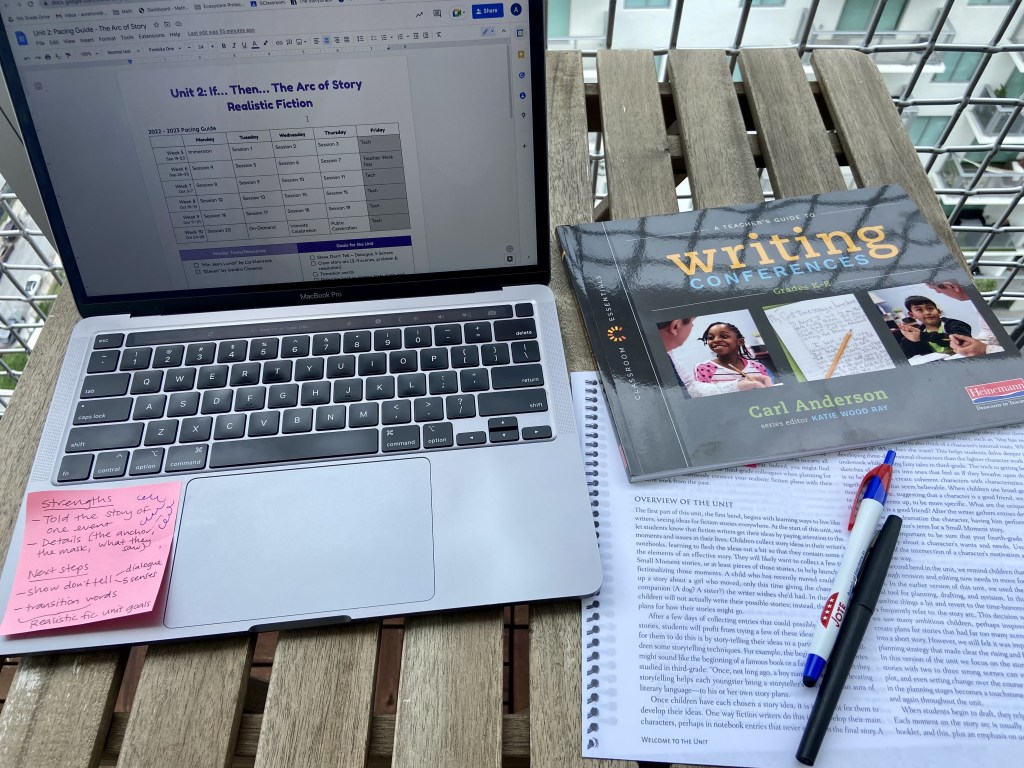
    Take, for example, our next writing unit. It’s a unit that I taught last year — The Arc of Story, Realistic Fiction — one which… didn’t go as intended. It was my first time planning and teaching a published Writer’s Workshop unit, and there were MANY things that I ended up wishing I’d done differently. I had some wins (learning how to craft teaching points & active engagement for the mini-lessons), but I mostly focused, as I tend to do, on the shortcomings (I barely conferred, and most students wrote 15+ page stories that weren’t focused and that they didn’t have time to revise).

    I’m energized by the chance to reteach this unit. For one thing, Ana’s going to be teaching it to 4th grade as well, which means we’ll get to put our heads together to brainstorm and rework lessons as we go. For another, I am coming at the unit with more confidence as a writing teacher and a clearer idea of how I can make the unit successful for my students and for me.

    Goals for the Unit

    The pitfalls from the last unit were clear, and the data from this group’s on-demand narratives supports them. So, I’ll be aiming to teach towards the following goals:

    • Focused short story arcs — 2-4 scenes, clear problem, clear resolution
    • Transition words
    • Show, Don’t Tell — specifically through (properly punctuated) dialogue and vivid description of setting and character

    Game Plan

    My game plan for tackling these goals includes:

    • Choosing mentor texts that clearly show off a command of the aforementioned skills, and referring to them consistently throughout the unit (both in mini-lessons and conferences). Last year, I used two picture books, but they were a little too long. I want the fifth graders to be able to see structure and scenes easily, and so some simple short stories are what’s needed. The two I’m going with are “Min Jee’s Lunch” by Elizabeth Kleinrock and “Eleven” by Sandra Cisneros.
    • Writing my teacher mentor piece ahead of time and ensuring that it also demonstrates and reflects the type of writing I want my students to be able to produce. Last year I tried making my piece follow the same structure as the example in the teacher’s guide. This year, I’m going off of my own seed ideas and thinking about the students I have in our classroom. Who are they? What will they relate to? How can I make sure that my piece is short and focused, just like I want theirs to be?
    • Creating a schedule for conferring with students one-on-one and in small groups so that I can keep track of what they’re writing and give them feedback before it’s too late. I didn’t start conferring with students until the third unit of writing last year, because I was still getting the hang of planning the mini-lessons. My students would have benefitted greatly from me reading their writing and meeting with them about it more regularly. (This is partly why some students wrote such long pieces — I didn’t catch them until it was too late.) I bought the new A Teacher’s Guide to Writing Conferences by the one and only Carl Anderson and am already digging into it. It’s a fantastic resource with tons of digital resources and videos of Carl in action.

    Staying Accountable

    I’ll try to hold myself accountable by checking in on the blog each week. Let’s see how it goes!

    Now, back to planning.

  • When Writers Grow

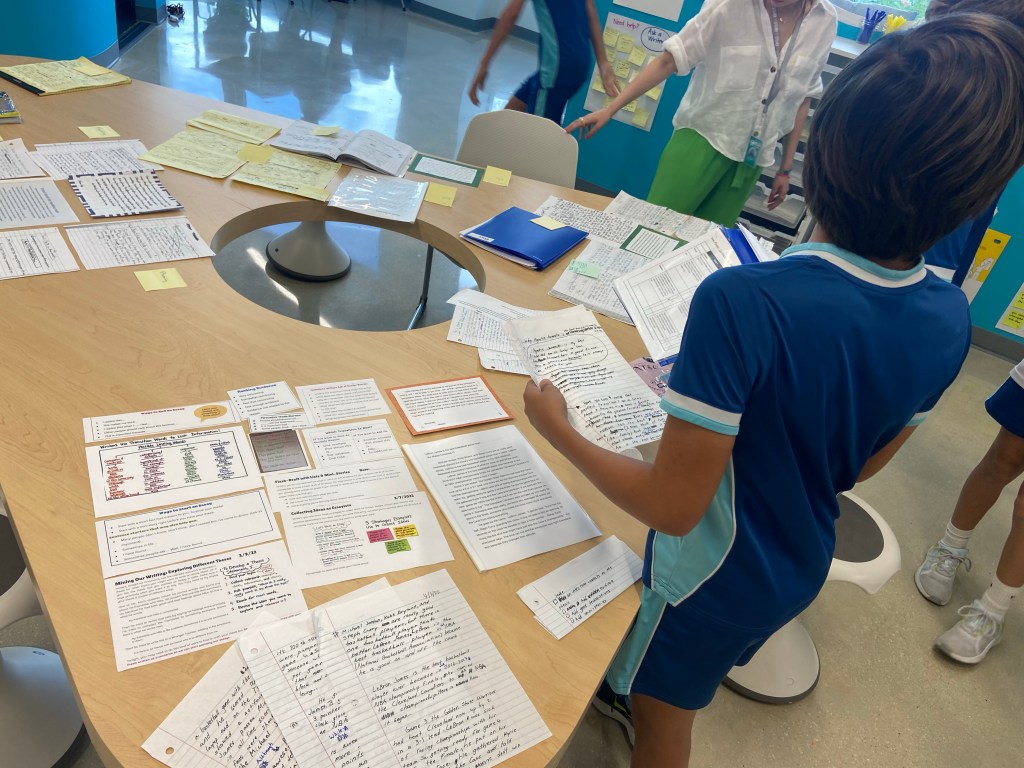
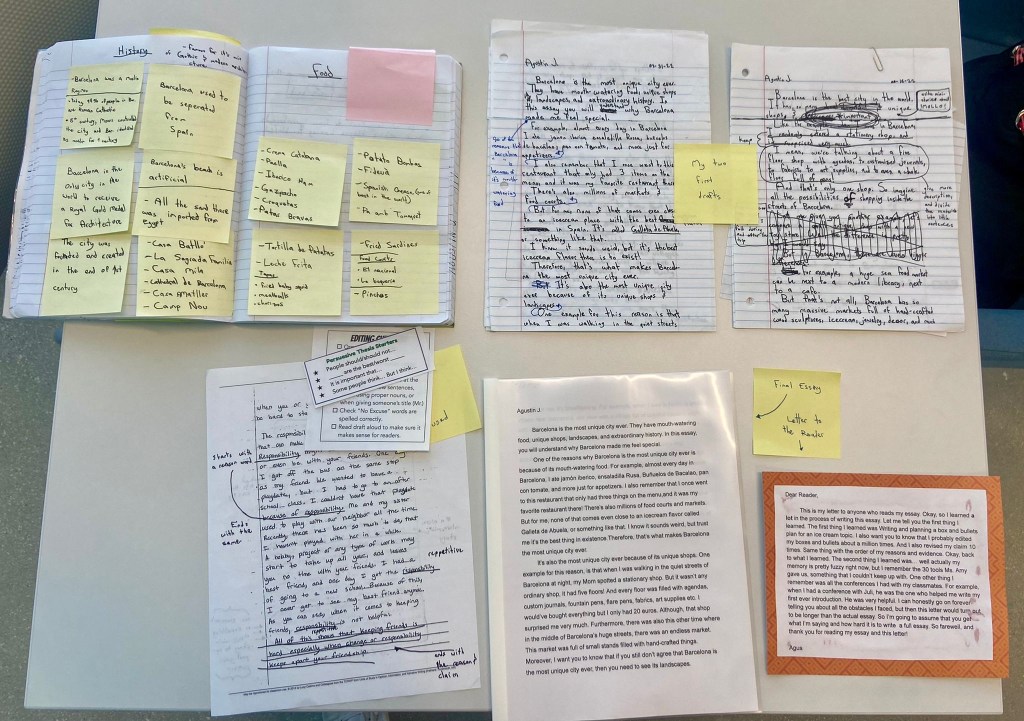
    This morning we held our essay writing celebration. I gifted students their typed final drafts in plastic report covers, their letters to the reader pasted on patterned cardstock. They set up their writing displays, encircling their essays with all the work that went into them: the ideas in their notebooks, their plans, their revised (and revised again!) drafts, the tools and strategies they used to help them. Some students grabbed post-its to label each page. Some flocked excitedly to their classmates’ areas, peeking at what they had put out.

    At 10:30 on the dot, Isa squealed, “They’re here!” and opened the door to a group of parents streaming out of the elevator.

    Each student greeted their parent warmly and guided them towards their writing display. And then the work of celebrating truly began.

    What I’ve loved so much about Writer’s Workshop this year is the emphasis on the writing process — on all of the work that goes into a published piece, rather than just focusing on the product. Publishing takes one day, whereas all the work before that — generating ideas, choosing one to plan and develop, drafting fast and furious, revising, and editing — takes up to 4 weeks. In one unit, writers generally cycle through two pieces, deciding in the final days which they will commit to publishing.

    The heart of writing lies in the mess, the struggle to find an idea, the conferences with a mentor or partner, the beautiful sessions where time flies without you realizing it, so focused you are on getting down the words in your head. The heart of writing lies in revision, in realizing your first draft isn’t your best. The heart of writing lies in looking at your writing as a reader, examining it from different angles and through different lenses.

    There is much this year that I have learned and that I still struggle with as a writer. I went to college for creative writing, and sort of fell out of it for a variety of reasons, only now starting to pick it back up again. I let the magic lie dormant for a long while, but these 5th grade writers have sparked that big magic in me again.

    Today I celebrate the writers in my classroom and their phenomenal growth. I celebrate myself, knowing that their growth is a reflection of my teaching. And I celebrate the possibilities ahead, for my classroom, for my own writing life, and for the future writing lives of these students.

    Brava.

  • A Beginner’s Mindset: Rollerblading in the Learning Pit

    A Beginner’s Mindset: Rollerblading in the Learning Pit

    This October, I decided to get back into rollerblading. Perhaps “get back into” is a generous statement, seeing as aside from the occasional outing as a child and one semester of rollerblading P.E. my junior year in high school, I was never really “into” rollerblading to begin with.

    But when I moved to Miami this summer, I had rollerblading on my mind. My friend Arta had lived here in one of our first years out of college, and one of the things she loved about Miami was the ability to do so many outdoor activities like boating and biking and, yes, ‘blading.

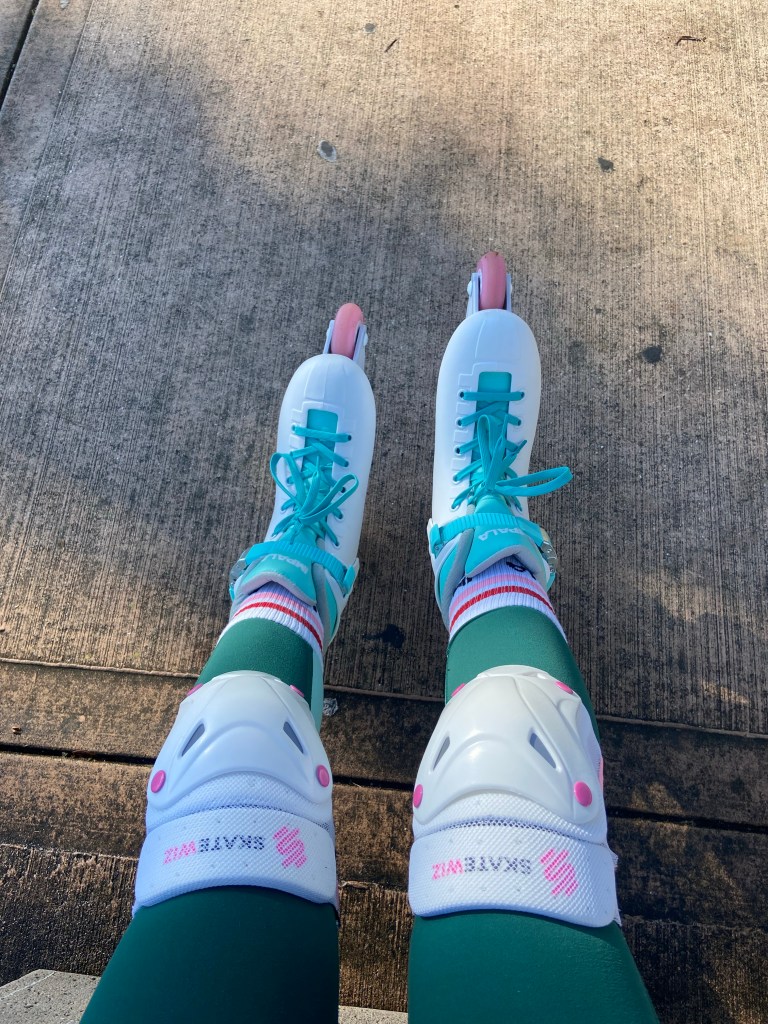
    So in October when I mentioned this to another friend, Meryl, and was met with equal enthusiasm, we both made a promise to skate together and promptly purchased some stylish 90’s-esque inline skates in bright pastels.

    My new Impala inline skates

    And when the skates arrived, we upheld that promise and went on our first skate date! Meryl picked me up and drove us out to Virginia Key, where we strapped on our new skates and our pads and realized very quickly that we were quite wobbly, the ground was not smooth as we’d imagined, and we both had no clue how to brake, especially when going downhill. So after that outing (which was quite enjoyable truly, filled with long talks and good views and a post-workout smoothie), I put my blades in their new bag, and shoved them in a corner of my closet.

    Where they sat for the next three months. Untouched.

    I will be honest: all of the joy and enthusiasm for blading that I had felt when I purchased them and put them on, wheeling around my apartment for the first time, dissipated at the early signs of challenge and the very real fears of falling on my butt. I didn’t want to feel that sort of failure again. I was embarrassed, and I was scared. It was easier to make excuses — not enough time, too tired, “oh, I’m trying to get back into running and circuit training actually now” — easier to give up, than to face the fact that if I wanted to improve I’d have to work at it.


    In the education world, there’s something called the Learning Pit.

    The Learning Pit, by James Nottingham

    I’ve taught about the Learning Pit a couple times over the past few years. It comes up at the start of the year usually, when we’re talking about having a growth mindset in the face of challenging academic tasks. I teach my students that it’s important to participate in productive struggle, and how mistakes help you learn because they cause synapses to fire in your brain (Jo Boaler, you are a goddess). We make lists of things someone with a fixed mindset might say (“I can’t do it” or “I’m not a math person”) and things someone with a growth mindset might say (“I’ve got this” or “If I just keep trying, it will get easier”).

    But here I was, preacher of all things growth mindset to my students, shoving my rollerblades into the darkest corner of my bedroom closet, letting the dust bunnies slowly devour it until I could no longer tell it was there (except that I could, because the bag was so big).

    Then two things happened:

    1. It was the new year, and you know, we set intentions. After spending winter break in freezing New York, I was determined to take advantage of my new city and go outside more often during the week.
    2. I got COVID in January and it completely knocked me out, forcing me to take a two-week break from working out.

    So I made a choice. I took a long hard look at myself and thought, “You know what, Amy, you’re the one who wanted to start this new hobby. You’re not going to become a rollerblading sensation overnight. And I know that it sucks, but you’ve got to start somewhere. Just put them on and commit to taking them out once a week and practicing. You can only get better from here.”


    That first Saturday morning of February, after fully recovering from my run-in with omicron, I strapped up, padded up, and took my blades out for a spin on the Venetian Causeway. It wasn’t perfect. I still couldn’t brake. But you know what? It was fun. It was more fun than I’d had in a long time. I felt… like a kid.

    The next Saturday, I bladed again, this time in Margaret Pace Park with the sole intention of practicing using my brakes. I felt silly in my pads and frustrated because it was still so hard, but the views and the music in my AirPods made it worth it.

    The following week, Meryl and I woke up early and drove out to the Miami Beach boardwalk where we skated for an hour, laughing and gawking at the views, and then had a delicious brunch of açaí bowls.

    Each time I skated, I felt a joy so authentic and innocent that it bubbled out of me. I came home feeling elated.

    And then last Saturday, after blading and realizing that while I love to be independent, I was going to need some outside support if I wanted to make significant improvements, I miraculously found a rollerblading group class that was starting in a few days and signed up.


    It’s a simple and generous rule of life that whatever you practice, you will improve at.

    Elizabeth Gilbert, Big Magic

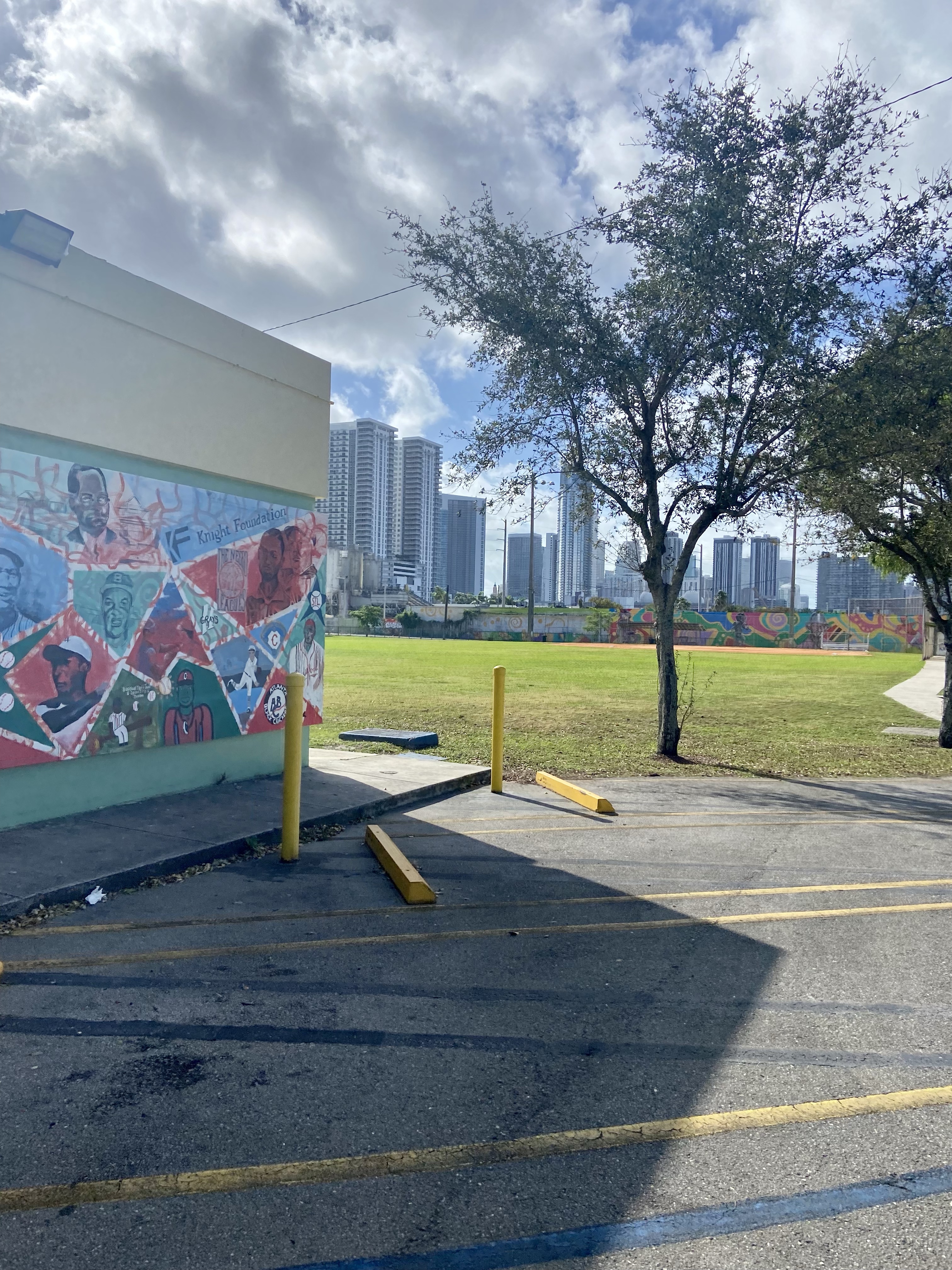
    I’m climbing out of the Learning Pit now. This morning, I woke up early and skated to Dorsey Park to practice the new skills I learned during my Thursday class.

    As I head home, I smiled and thought to myself, “I think I’m starting to get this.”

    I’m not over the edge yet, but I’ve got the rope in my hands, and I’m enjoying the journey up.