Writing With Abandon

Reflections and ramblings about life as an educator, writer, reader, knitter, and over-thinker. Trying to do the writing only I can do.

Tag: elementary school

  • Not the Outfit I was Planning to Wear

    This morning I was really excited to wear the new cardigan that I had just finished knitting over the weekend. I got dressed, took a few quick photos that I sent to my mom and Julie, and filmed an “after” video for the before/after blocking reel I wanted to make and show to my knitting club girls.

    My reel! Follow me on @acreknits 🙂

    In morning meeting, my fellow knitters were all compliments: “We love it!” “Is it itchy?” “Oh my god it looks so pretty!”

    It was a bit itchy, but no mind. It was the perfect coziness for our classroom’s powerful AC.

    Fast forward to 10:53am on the rooftop. Recess was almost over. Kim and I were sitting on the turf in the shade. Well, she was squatting. My computer was in my lap and I was focused on what I was doing, until it started to drizzle a bit, the tiny droplets landing on the screen.

    I shifted my weight and felt something wet underneath me. That’s when I remembered why Kim was squatting — she’d made a quick remark about the turf being wet, but I must not have felt it with my thicker jeans. Until now.

    I shot up.

    I arched my back to look, touched the dark line at the back of my thigh. Yup. Wet.

    Cold, wet denim.

    “Ms. Amy, it’s not raining!” M shouted at me as I began walking off the field. The rain started coming down a bit harder, but still light enough that, were my pants not soaking wet, I would have let them keep playing. But they were wet. Wet wet. The kind of wet where someone can see an outline of your butt and will most certainly assume you’ve peed your pants.

    “Nope, we’re going downstairs!” I shouted back.

    “But what about recess?” H whined.

    “You can have 5 minutes to chat, but then we’re doing math!” I said as I continued rushing out.

    The girls followed, confused. I turned my back to them and pointed: “My butt is soaked!”

    “Oh, Ms. Amy,” E said playfully, shaking her head as she ran alongside me, ever the teacher’s assistant.

    “Do you have a change of clothes?” M asked, always the most concerned.

    “I only have extra t-shirts!” I said as we raced down the stairs.

    When we got into the classroom, I grabbed my flannel and tied it around my waist. I remembered the coaches had some samples of new uniforms for next year that had been sitting on their desk.

    I texted Patrick: “Do you have any change of pants or shorts up there?” while running back upstairs.

    He was reading my text as I arrived.

    “I think Rosie may have gotten rid,” he frowned, opening his office door. Sure enough, the pile of uniform samples was nowhere to be seen.

    I ran back out.

    “Rosie! Where did you put those uniform samples?”

    She gave me a sheepish look. “Err, I donated them to Cuba.”

    “Ah, okay, no worries!” I said, hitting the elevator call button. I remembered last year when a student had gotten her period for the first time and needed a change of bottoms, the lobby had provided her with a pair of shorts. She was my size — surely they’d have something that would work downstairs.

    I got to the lobby and saw Nayelis, Ashley, and Cooper at the desk.

    “Hi Nayelis! Hi Ashley! I need a favor…” I began, explaining the situation. “Do you have any extra shorts or pants that might fit me?”

    “You sure you didn’t have an accident?” Cooper joked. He loves to pull pranks, ever since April Fools.

    “Let me see if we have something,” Ashley said, then disappeared into the car tunnel.

    While I waited, Nayelis showed me a couple phone cases she was considering. Between the pink and black one, I voted for black. Classic.

    Ashley came back, a pair of joggers in her hands.

    “You’re a lifesaver!” I said, grabbing them from her. Size 16, but I’m pretty small, so they would have to do. I ran to the bathroom, shrugged off the cold and wet jeans, and pulled on the joggers. A perfect fit.

    I tied my shoes, threw on my sweater, and headed back to class.

    The rest of the day, my colleagues stopped me and asked for the story. Ana particularly found it humorous.

    When I texted her about how I hadn’t sliced today, and was in between writing about AI or the two pope movies I’d watched last week, she sent me a voice note: “Why aren’t you slicing about the pants? In my head, when I saw you walk with those, I thought, this is a typical slice of life.”

    So there you have it. It was not the outfit I was planning to wear, but it was super comfortable.
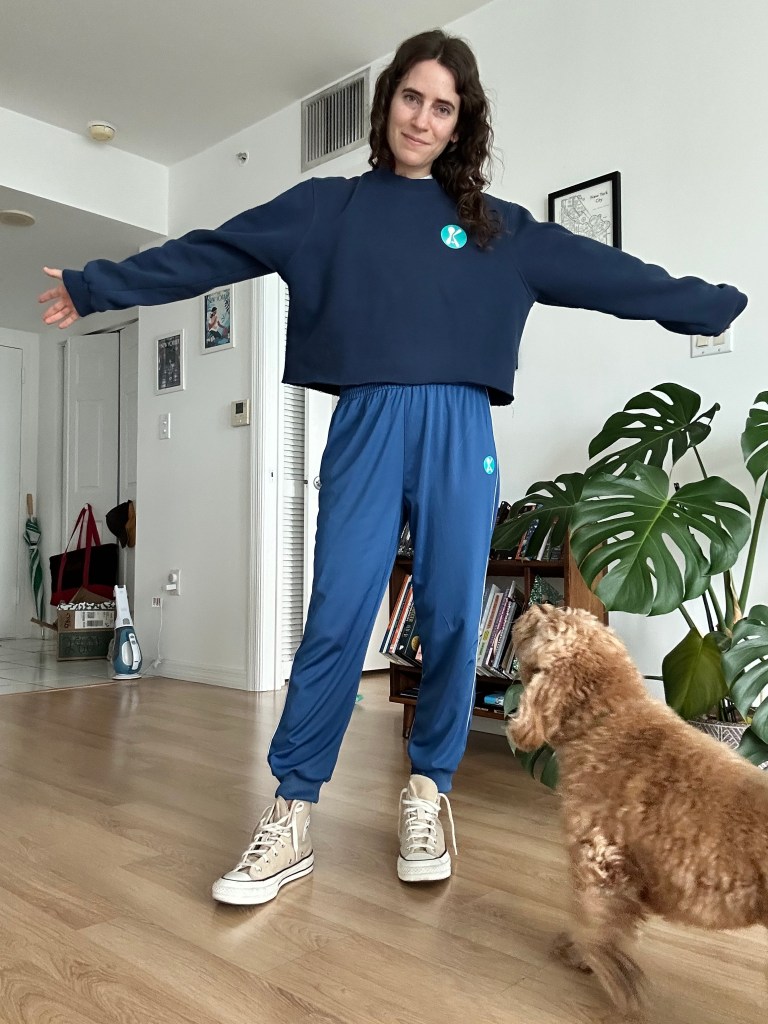
    I dunno, should I keep them?!
  • Could you have known?

    Dear 2021 Amy,

    Do you remember that first writer’s workshop session?

    It was just after 2pm on a weekday in August. You had a class of just 13 students, no co-teacher, squeezed onto the rug of that tiny room. Everyone was wearing masks, including you — yours was fabric, a light blueish-green with stripes that your dad’s bandmate’s wife had made. You could feel your breath warming as you spoke; you yanked the mask down slightly to be heard over the loud air conditioner, looked down at your lesson plan:

    Session 1. We Are Writers

    You hugged your notebook to your chest, which you had just decorated the weekend before at a friend’s house. You cut out patterns and letters from magazines. Your name — A-M-Y — on the front, your two words — JOY and CONNECTION — on the back, a quote from Jason Reynolds — “Writing is like any other sort of sport. In order for you to get better at it, you have to exercise the muscle.” — collaged between images that spoke to you, photos of family and friends. Under your chair, behind your legs, 13 fresh composition notebooks sat in a bin, waiting to be handed out.

    “Good afternoon, writers,” you started, feeling the hum of those words take flight and dip into the ears and minds of the students before you. “This year, we will write for many purposes and audiences. We will embark on this writing journey together.”

    Ana’s lesson plan said: “(Make a big fuss handing out NBs.)”

    So, of course, ever the good student, you did, handing each notebook to a pair of reaching hands as you told them that next week, they’d have the opportunity to decorate their notebooks with photos, drawings, quotes, and more.

    You settled back into your chair, leaned forward ever so slightly.

    “Today I want to teach you that the only thing writers need is a pen, paper, and a beating heart. We write about what we know, what we see, what happens to us or others. Everything we experience can become a story if we capture it in our notebooks.”

    Could you have known then that you were giving them the tools they’d need to write their own slices of life?

    Could you have known then that this lesson is timeless, that “today and every day,” you really can “see every idea that pops in your head as a possibility for a story”?

    Could you have known then that Ana would become much more than a mentor, a writing partner, a friend?

    Could you have known then that you would have so many more magical moments with those students, and the next group, and the next, and the next?

    The half groups in 2022, in the bright windowed corner room. The writing conferences where a student’s pen started racing across the page before you stepped away. The independent writing time when you were writing too, and it was so silent you could hear a pin drop because you’d forgotten to put on the music, but it didn’t matter because everyone was in flow.

    Could you ever have known then that by teaching kids to believe themselves to be writers, you’d be helping the writer in you find her way out onto the page again?

    Could you have known then that you were speaking as much to yourself, the dormant writer, as you were to them, the writers-to-be?

    I know now, so I write to the you of then:

    Writer’s workshop will, without a doubt, change your life.

    Yours, always,

    Amy

  • A Friday Slice

    “Are you going to do the Slice of Life Challenge this year?” Ana asked me this morning as we passed each other in the halls. “Male and Angie are gonna do it, and Gi too.”

    “I don’t know…” I skirted. This year’s intention to slice every Tuesday started out strong and then waned in the fall as I dealt with some personal health issues. If I couldn’t commit to doing it weekly, how could I do it daily?

    *

    Later, when we met in my room, she mentioned it again.

    “I just sent an email to the second grade team. Darlyn is in!”

    “Maybe…” I smiled. We returned to the writing plans. I shared something funny a student had said about me moving the teacher’s desk.

    “That’s a slice!” Ana exclaimed.

    “Should I just write it and schedule it for March 1st?”

    “YES!”

    *

    At 3pm, while I was waiting to meet with Male, Ale left Ana’s office and Ana shouted, “Ale’s gonna slice, too!”

    “Okay, okay,” I laughed. With this many new slicers from our little school community, surely I could get motivated enough to slice again each day for the month of March. It was tough last year, but it was also fun and satisfying, connecting me not only with other slicers but with friends and family (hi, Mom!). Plus, I have a little time capsule now that captured a joyous month in my life when, among other things, I was falling in love.

    So, here it is. Today’s slice. Never mind that it’s a Friday:

    *

    This morning when I entered the classroom at 7:48am, I had visions of the documentation that would start to emerge on the bookshelves as I cleared them. But something wasn’t right. The table by the window always got in the way, and the chairs were all different sizes. There was all this dead space near the teacher table, too, and the math materials were blocked off and inaccessible to the students.

    So, I did what I always do when I realize the layout of the classroom doesn’t align with how we’re using it — I started rearranging.

    First order of business: moving some of the writing charts. Next? Swapping the teacher table with the long one at the window.

    The first students arrived at 8 to find me and all of our tables and chairs scattered.

    “Good morning!” I shouted.

    “Um, hi? What’s going on?” Two of the girls asked.

    “I’m rearranging the furniture. Help me!”

    “Okay!” They agreed. These two are always up to help with anything.

    “Is this table going to stay on the rug?” The other girl asked, skeptical.

    “No, no,” I assured her. “It’s just there while we get the rest sorted.”

    Then two of the boys arrived.

    “Happy birthday!” I said to one of them who turned eleven today. “Help us move these smaller chairs to the other room and grab all the big ones to bring in here?”

    They set off on their task as a few more students arrived.

    “We’re rearranging everything!” One of the first girls explained.

    “Why?” A student yawned.

    “I don’t know! For a change?”

    “Because Ms. Amy was doing it when we came in!”

    “But Ms. Amy, it’s so sunny over there! You’re going to fry like a grilled cheese!”

    “I liked it better before.”

    “Yeah, what about all the other teacher stuff that’s still over there? It’s so far away from your desk now!”

    Once everything was moved, and we were mostly satisfied with their placements, we gathered for Morning Meeting.

    I explained to the fifth graders that I got the rearranging “itch” from my dad. When I was growing up, he always moved around the furniture in our combined living room/kitchen/dining room. I’d wake up and come out to see things in different places. It would be a bit of a shock to the system, and then I’d get accustomed to it. Ever since, I have constantly rearranged my dorm rooms and apartments to whatever felt right. And I always found that rearranging gave me a refreshed feeling, a sense of starting anew.

    I’ve found that with classrooms, even the same one, once you see how the students of that year are using the space, it often becomes clear how best to arrange the furniture. (And it’s apparently good for their brains to have that change!) Sometimes you only need to rearrange once. Sometimes more! (Like last year, which one of our students hated, but Kim loved.)

    A half hour later, as we were teaching math, Sol came in and widened her eyes. She walked over to the desk.

    “I rearranged!” I said.

    “I see that,” she laughed. “Are you trying to slow cook us?” She asked as she shaded her eyes from the sun beaming in through the window.

    “Seriously, Ms. Amy,” M said. “Yesterday, this was you: ‘Oh my god, the window is so hot, we need to move things away from the window.’ This is you today: ‘I think I’ll put my desk by the window. Yeah, good idea…’”

    He’s not wrong, but I’ll give it a chance. I think it will work.

  • Reggio, Meet Ralph.

    This summer, at the Quoddy Institute, one of the other teachers (I think it was Cheri!) mentioned that she and her 5th graders always start the year reading Ralph Fletcher’s Flying Solo, a book about a class of 6th graders and what happens when one day, neither the teacher nor his substitute show up. She told me how one year, they even did their own experiment where she and a colleague didn’t go back to the classroom after recess, instead watching what ensued from the window across the playground. Fascinating, I thought! I immediately went to my Amazon app, added it to my cart, and hit “purchase.”

    I read the book quickly before school started, then gave it to Kim to read as well. It’s short, around 150 pages, and it was perfect for the first read aloud as it had a great theme about integrity and would give them plenty of practice making inferences about story elements. I figured we’d read it within a couple weeks, then launch into Starfish by Lisa Fipps, a favorite from last year.

    But each day that I read Flying Solo to my fifth graders, I uncover another layer of the book that I hadn’t noticed before. Like how many references there are to democracy, or all the time jumps there are (perfect for teaching about the importance of flashbacks!), or Ralph’s excellent use of figurative language.

    And my students’ reactions have been unexpectedly thoughtful as well. It’s a fun book, a real kids’ book, so they’ve been very engaged from the beginning. But they’ve also shown deep empathy for some of the meaner characters (like Bastian, who teases the other kids, but “is probably doing that because he’s sad about moving and his dog, Barkley,” one of my students said). They’ve made many predictions about Rachel and whether or not she’ll speak by the end of the story. They laugh at Christopher saying “fact” and “opinion,” roll their eyes at lame jokes (and widen them at the can’t-believe-she-just-said-that jokes), and cheer on the students who stand up to the others. They endlessly wonder how Tommy Feathers died, shocked and saddened that it could happen to someone so young.

    They’ve practiced summarizing for their classmates who have been out sick, have distinguished between primary, secondary, and tertiary characters, and have talked endlessly about the plot and how they wish there was a movie.

    This is where the Reggio spark really begins:

    Two of our girls were walking alongside me in the hallway on the way to lunch when one said, “This book should be a movie!”

    And I replied, “I want to make that movie!” (Laughing to myself because the other night, as I told P about the book, he and I both said we could imagine it so clearly as a play!)

    Our conversation continued through the lunch line as we grabbed our plates, then sat at the lunch table with Kim and three of our boys. I opened up the Otter app to record our conversation, and let their ideas bubble up and build on one another:

    “We could do it for a show!”

    “We’d need another person that’s Rachel that speaks for her, because so much is going on inside her head. Like a voiceover.”

    “We could rehearse during read aloud.”

    “We could pick out the characters and think of ideas, act it out, and maybe write our own script. Or you can pick ideas from it?”

    “We might need to cut some of the characters that don’t have that many character traits.”

    “I want to be Rachel!”

    “I want to be Jessica!”

    “I want to be Christopher!”

    “Hold on,” I said, the gears turning in my head. Could this work? Could we make this happen? “I’ll need to email Ralph for permission first.”

    He replied within the half hour: “Yes, you have my permission…that would be really great.”

    We told the students at the end of the day and they cheered! That was yesterday. Today, they’ve been talking about it nonstop throughout the day. Ralph sent us a video of him talking about the book, which we watched in closing circle. This Thursday we’ll finish it and next week we’ll start our talks about writing a script. We’re all a little bit in disbelief… and a lot a bit excited.

    And that is how a Reggio project is born.

  • On Letting Go and Watching Her Fly

    There’s something about teaching Writer’s Workshop that I feel oddly possessive about. It was something I grasped tightly to after meeting Ana, moving to Miami, and starting to work at KLA. It helped me through a tough couple of years in my personal life. It was something that I had control over, and which brought me and my students joy. It got me writing again, got me to see myself as a writer, just like I hope my students will see in themselves.

    So, letting go of it as a subject that I teach, that I plan, feels… scary, and uncomfortable, followed by guilt that I feel that way. It’s like a blanket being pulled off the bed that I’m still clutching to a corner of because I am desperate to stay snuggled up in it, even though I know the blanket is big enough for me and another.

    But that fear and discomfort gets replaced by awe and pride each time I watch Kim lean in and open up to the students, whose eyes light up with her stories. Every time I watch her implement all that she’s learned in just one year. There’s no doubt in my mind she will teach them so wonderfully. And I’ll be right beside her to support, to model conferencing, to be her mentor.

    “Writers, today I want to teach you,” she says, using that predictable language. And teach them she does.

    I can’t wait to watch her fly.

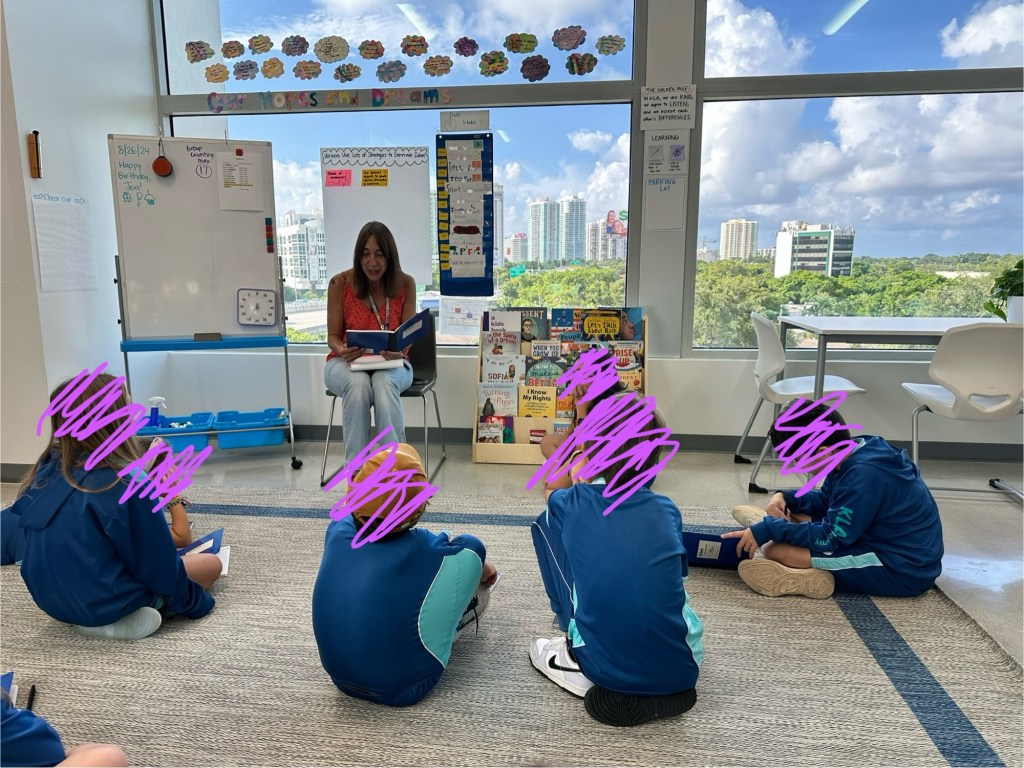
    Kim reading one of our student’s stories out loud, just like Georgia Heard did for us at the Quoddy writing retreat.
  • The First Writer’s Workshop

    It’s 5:30am and I’ve already been up for an hour. I’ve been struggling with morning insomnia for a few months now — waking up around 4 or 5 to pee, and unable to quiet my brain enough to fall back asleep. I have a notebook beside my bed to help me dump these thoughts, the goal being to train my brain to deal with them later, but tomorrow is moving day and so I’m too excited to settle back down.

    Besides, it’s the perfect time to get my slice of life out of the way. And I do have a goal for my Tuesday slices, now that the school year has started — I’d like to document a year in the life of a 5th grade teacher and her class and the learning we all do. So I thought I’d begin with the first Writer’s Workshop.

    ***

    This year is a little different. It’s the first year at KLA that I don’t have Ana in the classroom across from mine or down the long hallway, and it’s not because she’s on maternity leave or has moved away. Ana has gotten the job we’ve all been hoping for (and more!): instructional coordinator. This means she is more available to do coaching work with teachers, coordinate curriculum for the school, help streamline and align all-school practices, and so much more. This spring and summer, she also wrote a whole new WW launching unit for us: The First 20 Days of Writer’s Workshop, a beautiful unit that emphasizes talk, encourages teachers to join in the writing, and keeps writers in their notebooks to help them develop a strong repertoire of strategies for generating ideas of what to write about.

    To be honest, my head hasn’t been in the right place since starting school, what with everything that’s been going on (see my last post), but I knew I needed to start this year off right with a first Writer’s Workshop lesson that would hook my writers. That need became even more apparent when, during our morning meeting share, students expressed their feelings (good or bad) about writing — some saw it as something to enjoy, when they got to write made up stories or jot down their feelings to destress, while others cited it as being boring, hard, or tedious, unless they were passionate about the topic.

    I knew this first lesson would be important in convincing my reluctant writers that maybe, just maybe, there could be something to enjoy about writing this year. (And I have verbal — and written — proof from previous years that I’ve been able to do this. Many students who previously didn’t like writing either fell in love with it or found the utility in it.)

    So, as they gathered on the rug in rows for the first mini-lesson, I took a breath, told them I needed a moment to put on my writing teacher’s hat, and then leaned in close, as if letting them in on a secret: “Good morning, writers.”

    Envisioning language, a suspenseful story, big eyes and smiles, audible surprise — I wish I could have filmed the lesson from my perspective. It was a beautiful example of engagement, when every single kid is there with you, one of the utmost highs of teaching.

    And then, the planned conversations for oral rehearsal — one partner talking, the other asking follow-up questions. By the time I sent them off to write, there was no question that the notebooks would be filled. When the timer beeped, you could feel that they would have kept going.

    But it’s the first six weeks of school. The first 20 days of writing. And so we go slow to go fast.

    I’m ready for day 2.

  • Full Circle

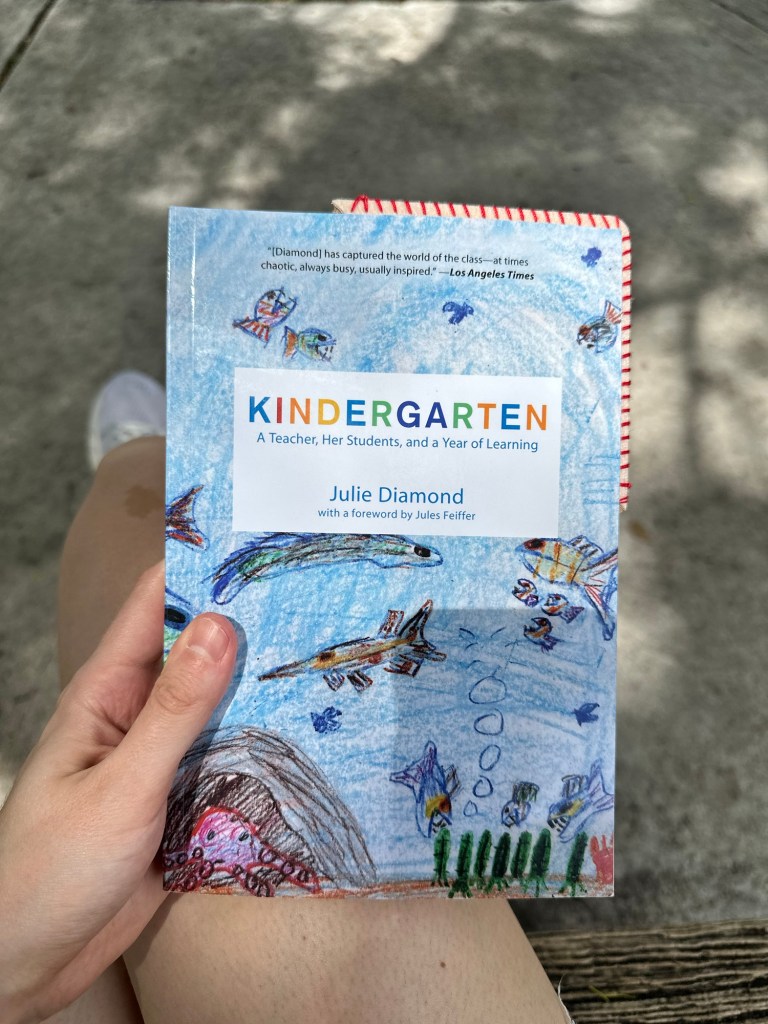
    In May, a post on the TWT blog caught my eye, as it started by quoting a teacher, Julie Diamond, from her book, Kindergarten: A Teacher, Her Students, and a Year of Learning.

    Wait a second, I thought. Julie Diamond? Could it be that Julie Diamond?

    Sure enough, when I googled the book and the author, up popped my own kindergarten teacher from decades ago, with her short, gray, cropped hair. I immediately ordered the book from Amazon and patiently awaited its arrival.

    On Wednesday, I went to a dog park with Phoebe while P taught a private soccer session, and began reading.

    The gorgeous cover with Estelle’s bookmark gift peeking out.

    I couldn’t put it down. I read, wishing I’d brought a pencil to underline and take notes in the margins. I reluctantly dog-eared the pages, swearing I’d unfold them as soon as I got home and write the notes I’d been meaning to (which I did).

    In a serendipitous way, I discovered, through reading Julie’s words, that my first elementary school teacher had a teaching philosophy truly aligned with my own. Progressive, project-based, child-centered, Reggio-inspired.

    How much of my educational career, both as a student and now as a teacher, can I attribute to that first year of my schooling at PS 87 under her tutelage?

    As Julie explains how she (and you, the teacher-reader can) truly listens to children and lets them guide their own learning, providing practical advice for setting up and running a classroom, I find myself affirmed, inspired, and impassioned. I am a sponge, soaking up as much teaching as she has left to share with me, some 28 years later.

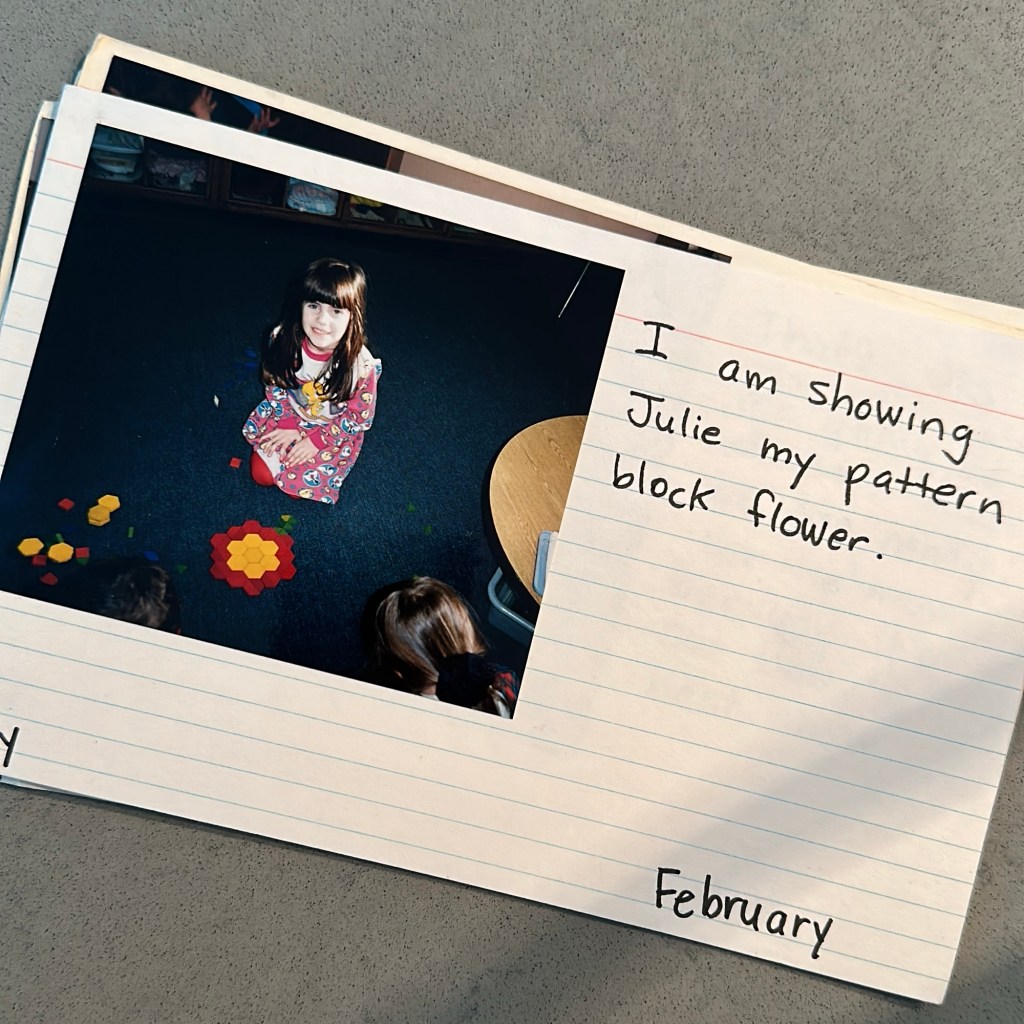
    Kindergarten me

    I feel more excited about heading back to work in August than I have been in years, and I’m curious about setting an intention to write about the upcoming school year: “a teacher, her students, and a year of learning.” What a beautiful idea.

    Perhaps the SOL community is a good starting place to hold me accountable.

  • The Joy of Writing Mentor Texts

    It’s my fifth year teaching fifth grade, and my third year teaching Writer’s Workshop to fifth graders. Last fall, I was excited to attend an online session with Hareem A Khan and Eric Hand for their new Graphic Novels unit for Grades 4-6. I was blown away by the work they did and immediately pre-ordered the unit. When it came in the spring, I eagerly launched into teaching it, knowing my student writers would love it.

    Last year, though, we were only able to do the first bend, as it was close to the end of the year and we had limited time. Instead of writing my own mentor text, I based mine off of Hareem’s, which is great, as it worked for all of the mini-lessons, but it wasn’t my own. I didn’t have to actually go through the writing process of generating an idea, bookmapping, considering panels as I sketched my thumbnails, or really working on my cartooning skills either when drafting. I didn’t have (or get) to experience the time-consuming yet rewarding process of creating my own short graphic novel. Until this year.

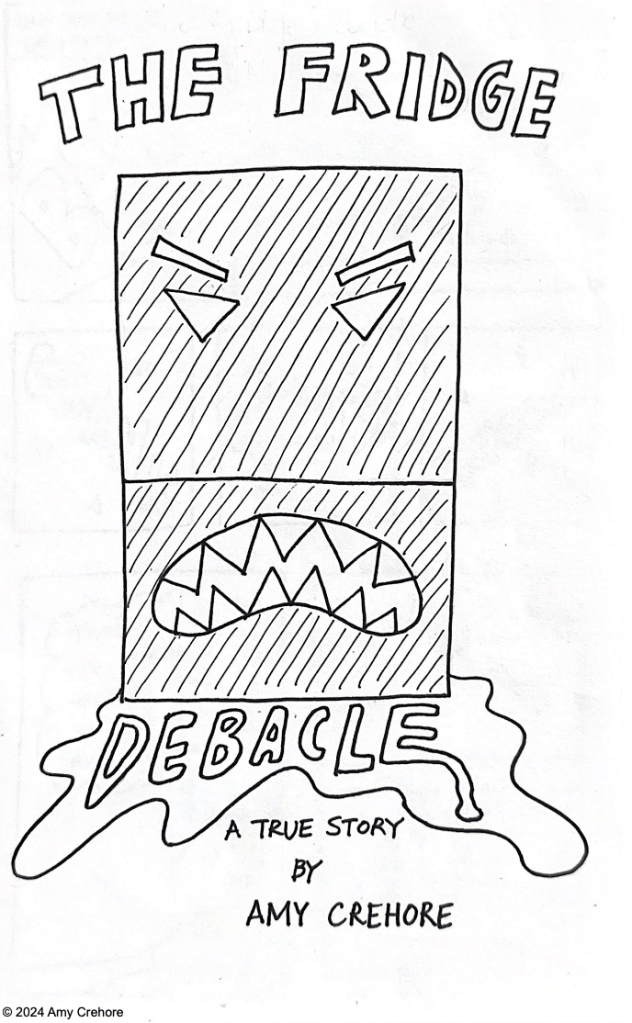
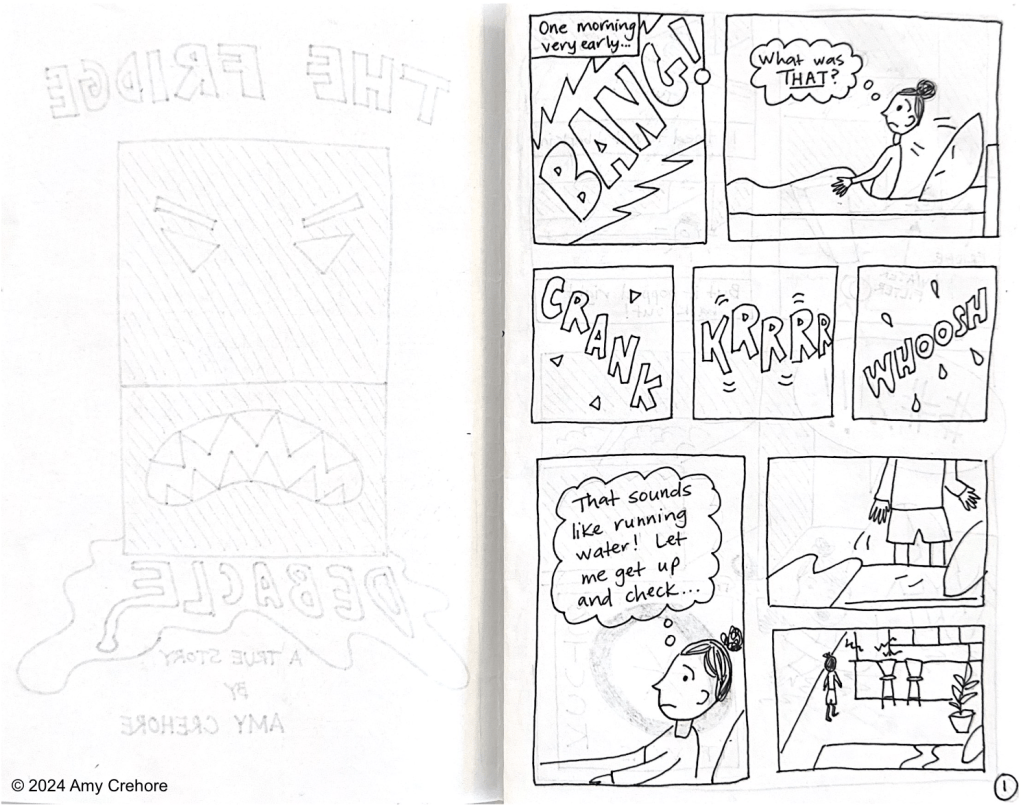
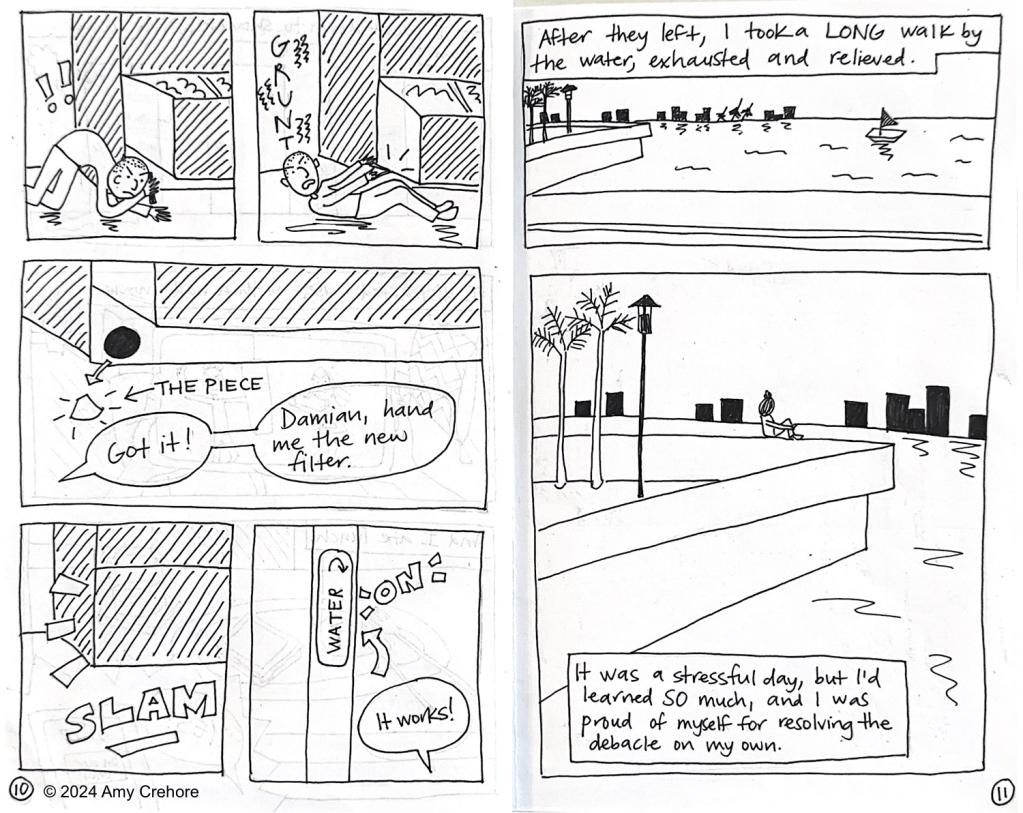
    This year, we had enough time to teach the full unit. I didn’t reinvent the wheel with the first bend, so I still used my Hareem-inspired graphic novel for that. For Bend II, in which the children write graphic memoirs, I knew I wanted to challenge myself to create my own, and I knew exactly the small moment I wanted to use for it: the fridge debacle.

    Throughout the unit, Kim has remarked over and over again how incredible it is to watch the writers’ engagement in this medium. As graphic novel lovers, they thrived (with only a few gripes here and there of “I’m no good at drawing!” — but once they realized they could get away with stick figures, it was full steam ahead). And for me, as someone who enjoys doodling herself, I was thrilled to be working in the new medium as well. I even enjoyed students’ feedback for revisions during mini-lessons, such as the lesson where I modeled how to build suspense by deciding on the number of tiers and panels within each tier. I revised an original thumbnail of 3 tiers, 2 panels per tier, to 3 tiers, one panel per tier, because as R suggested, it would be much more impactful: dun, dun, DUN! Or when E remarked that I could start the story right at the loud noise waking me up, and flashback to the preceding trouble later on.

    And the result has been so much more rewarding than creating a mentor text that I can use for future teaching: I used writing and cartooning to create art out of one of the more annoying and stressful moments of my adult life. It took lots of time, stolen at lunch, or while the children were reading or writing or taking a math test, or at home while I watched Netflix. The joy of sharing this piece with my students who have followed along and assisted me in the process has been so special, as has sharing it with my friends and family who experienced the debacle alongside me.

    I present to you, The Fridge Debacle:

  • All The Things We Do

    Today after eating with Kim and Ana and talking about reader’s workshop and writing conferences, I fell into a deep “I’m a terrible teacher” mindset.

    “I haven’t conferenced. I’ve sucked at reading their work,” I texted Ana. “And now I feel bad that they’re not reading daily, but we can’t change the routine again this year.”

    She grabbed me as we passed in the cafeteria: “I was literally having the same thoughts yesterday in the shower.”

    Then she suggested making a list of everything we are doing, so we can see where there’s wiggle room. What can we knock off our plates so we can do this?

    “But I also like my work-life balance this year,” I told her. “And I don’t want that to change.”

    I walked over to Kim and opened a new document on my computer.

    “I want to make this list, but also so we can see that we’re actually doing a lot.”

    “We do SO much. I love this idea,” Kim agreed enthusiastically. “I used to do this for parenting, too.”

    I appreciate Kim’s enthusiasm for all the things.

    So I started typing as we both shouted things out:

    ///

    ALL THE THINGS WE DO

    • Prep the materials we need for that day (copies, manipulatives, charts, post-its)
    • Plan lessons and units (writing, reading, read aloud, math, investigations, SEL, word study, sentence study, morning meetings, closing circles, integrated projects)
    • Create anchor charts for various lessons and units
    • Check and give feedback to their math work
    • Check and give feedback to HW
    • Email parents
    • Attend meetings during and after school hours (Hiring Committee, Literacy Committee, Tuesday PD, parent meetings)
    • Support students when they need help during independent work
    • Manage social emotional needs — conflict resolution, redirections, etc.
    • Transition them all over the school
    • Do mindful moments and brain breaks
    • Take them to snack and recess and lunch
    • Plan and execute field trips
    • Plan and rehearse for graduation / end of year things (middle school panel, blast off week, graduation rehearsals, etc.)
    • Write, direct, and produce a 5th grade show, which included rehearsals daily for the weeks leading up to it
    • Give kids band-aids (physical and emotional) when they need and clean poop off their shoes after recess sometimes
    • Collaborate with coworkers to do integrated learning
    • Do mentorship ALL THE TIME (sometimes formal meetings, sometimes informal, always happening constantly)
    • Take our own mental breaks (at our lunch and recess)
    • Brainstorm together constantly
    • Put out fires as they come up
    • Meet every other week with Male
    • Make each other laugh so hard we cry
    • Create partnerships and groups for collaborative work
    • Shepherd the children like wayward sheep at the end of the day
    • Manage time all the time (it’s like I have a TimeTimer living inside of me)
    • Manage arrival and dismissal (20 mins in the morning + 20 mins in the afternoon)
    • Take verbal punches from the children daily #FifthGrade
    • Get and give hugs (and a little bit of lice)
    • Document everything! (photos, videos, audio recordings, transcribing, creating wall documentation – printing, cutting, putting it up)
    • Work with small groups
    • Check in with students one-on-one during independent work
    • Create and modify assessments
    • Create rubrics for assessments
    • Grade assessments and projects
    • Grade writing (unit work + on-demands)
    • Hold celebrations for writing that often include other teachers and students
    • Write positive compliment post-its for each kid, almost every week
    • Find games and other early finishers activities
    • Complete progress reports (cumulative grades, comments/narratives, inputting them into Google Slides, saving them as a PDF and schedule sending to parents)
    • Hold parent teacher conferences
    • Do F&Ps three times a year
    • Complete middle school recommendations
    • Administer MAP exams, then download and send the results to parents
    • Reevaluate and reassess how our teaching is going, then adjust and shift based on what we think is best (sometimes involving whole new planning and prep, such as for read aloud, reading stations, etc.)

    WHAT WE’RE NOT DOING

    • Writing conferences and small groups
    • Reading their writing notebooks / using them as much
    • Protecting indie reading time
    • Aligning our investigations to the social studies and science standards explicitly (general topics, but not the nitty gritty)

    ///

    I shared the document with Ana.

    “OMG YESSS. This is your slice today :)” was her reply.

    I may still be ending this day feeling like a worse writing teacher than I was last year. But I do recognize that I’m doing SO much. And I hope that anyone else who ever feels this way realizes that they are, too.

  • Day 20: Reading Stations

    This week, Kim and I started reading stations.

    We’d tried TC’s 5th grade reading units with a workshop model and had little success with them. As a new school, we haven’t had a curriculum that students have followed since kindergarten, meaning there are large gaps and inconsistencies in what students are capable of doing. We were finding it hard to engage all students in the mini-lessons, whether reading happened earlier in the day or at the end of the day. We also saw a need for more consistent language study (vocabulary, spelling, grammar, conventions), but couldn’t figure out how to fit it in our day. Squeezing it in at the end of writer’s workshop was too rushed, and when we missed it, it just… wasn’t happening.

    In the fall, we both took the Shifting the Balance upper elementary course and realized that there were many other practical activities we could be doing, but that didn’t fit into our reading block as it was. When our investigation stations that we began in January were so successful, we decided to try a similar model for reading.

    There are six stations: indie reading, read with friends, write about reading, fluency practice, word study (using Structured Word Inquiry), and sentence study (using Judith Hochman’s Writing Revolution). The two language study stations are teacher-led, and the others are independent. Students go through two stations in a day (20 minutes in each), and cycle through all six after 3 days. Then it repeats.

    With February break and our theater show and the overnight, we couldn’t start the stations until this week. Today, after the second class, the students shared during Closing Circle some of the things they were enjoying about reading stations so far. Here’s what a few of our boys had to say (boys who are semi-reluctant readers!):

    “Something that I like about reading stations is that we get to do many things, we get to move from one to another. It really makes me feel like I get so many options to do super cool stuff to read. Like, I never knew that. When I hear reading, it’s just like, reading, indie reading. Now I know that there are many things to do when it comes to reading. Super cool.”

    “Something I like about reading stations is the word study and kind of like, it changed like, I saw that reading isn’t only looking at a paper and seeing the words.”

    “Something that I liked about reading is the word study and the sentence study and indie reading because I like to read by myself.”

    “Something I’m enjoying in reading stations is learning new words and the history of words.”

    We headed to dismissal feeling buoyed by their positivity. I’m so grateful to work with Kim, who’s just as enthusiastic about trying new things as I am, and I’m excited to see how reading stations go for the rest of the year!