I’m Amy. A born and raised New Yorker, currently living in Miami. Here to reflect on my experiences as an educator and learner, working things out as I write.
As a teacher, I don’t like to take days off from work.
Whether it’s for self care or a true sick day (like today), the thought of not coming in and showing up for your kids makes you feel even more ill.
Because teachers can’t just take a day when they’re not feeling well. We have to find subs and create sub plans, knowing all too well that most likely, we’ll need to reteach it anyway.
Luckily at my current school and at my last school, I’ve had co-teachers. That’s a game changer.
Still, there’s always a sense of guilt as you let them know they’ll be managing on their own for the day.
The only thing that makes it better is when you return the next day and the kids brighten and say, “Ms. Amy’s back!”
I lived in Madrid for two years in my early twenties, working four days a week at an elementary school as an English language and culture assistant. That first year, I rented a room in an apartment with 5 other girls that became known to us as “el piso paraíso.”
The other girls were there on Erasmus, Europe’s study abroad program, completing a year of either their bachelor’s or master’s degrees. We were new to Madrid and excited to explore all it had to offer.
And Sundays were the best.
Usually nursing a resaca from a fun night out, we’d slowly greet the day in the kitchen with an espresso and some eggs or cereal. Then we’d shower, get dressed, and get ready for a slow walk through el Rastro, Madrid’s huge open-air flea market in the La Latina barrio.
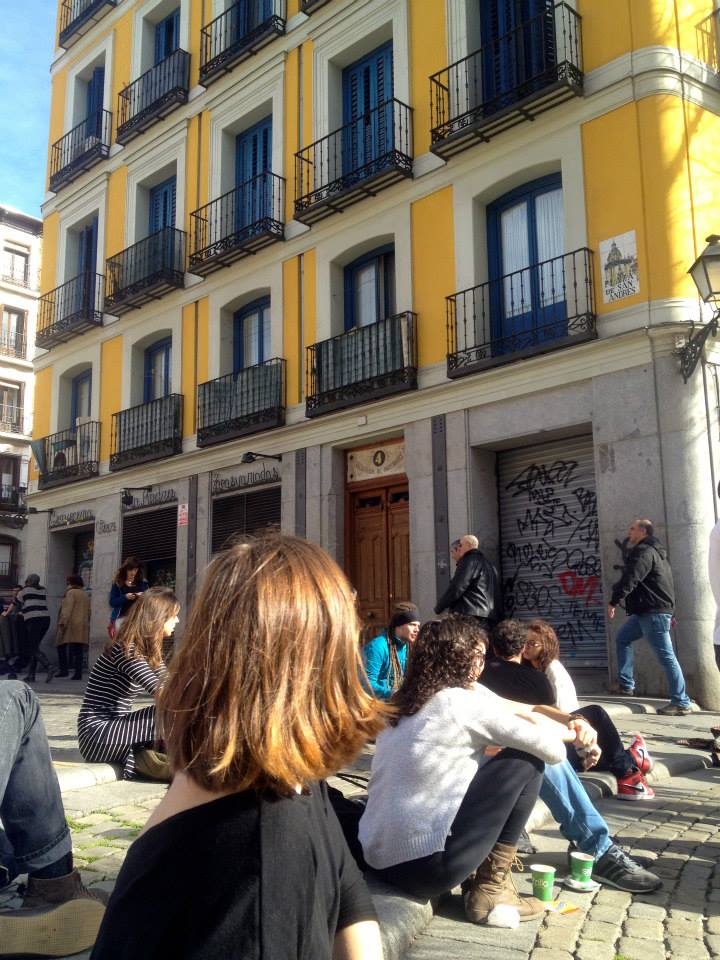
We’d grab a tapa and a caña (a little hair of the dog always helped) from Calle Cava Baja, then stroll down the hill of the main street of the market. El Rastro had everything — from cheap sunglasses and leather belts, to vintage dresses and Levi’s jeans. We’d walk the side streets and find shops with antique trinkets and used books. A few times, we’d wander into Mercado San Fernando for lunch, some groceries, and a little bit of salsa. Other times we’d find a plaza and sit in the sun for a while.
Sun-kissed and tired after an afternoon of walking and shopping, we’d eventually meander home, where we would spend hours in the kitchen talking as we cooked and ate dinner, until finally it was time for us each to go to bed.
“Buenas noches, chicas,” my friend Giada would call out before she FaceTimed her mom and sister back home.
I’d fall into bed full and warm without a care in the world, catch the moon glinting off the window of my balcony, and drift swiftly off to sleep.
At recess on Thursday, one of my students was lingering by the jungle gym where I sat looking out at the group of boys playing soccer.
“So, _,” I asked, “what do you plan to do over your long weekend?”
He grabbed onto the bars above him and swayed a bit as he replied.
“Play basketball, probably.”
“Basketball? What happened to soccer?” He’d been newly into soccer for the past few months, so I was surprised to hear a new sport take the stage.
“Yeah, it’s all basketball now,” he said decidedly. “I mean, I’ll probably still play soccer at school and stuff, but my new focus is basketball.”
It reminded me of my own rotating carousel of hobbies, specifically with sports.
As a kid, I played soccer from 4 to about 16, when I developed a Haglund’s deformity in my right heel and couldn’t play anymore because of the pain.
After surgery and physical therapy, I was able to run, and I got into long distance running after graduating college. I ran four half marathons between 2014 and 2019, among a slew of other 5ks, 10ks, and other races. I love running, how it’s like meditation, but the high-impact of road running left me with shin splints and other aches and pains.
I have always done yoga on and off, but usually only about once or twice a week.
I love to bike.
Just before and during the pandemic, I started the Vertue Method, a 12-week, at-home, low-impact strength-training program, and was very committed to this until I’d seen each video enough times that I’d memorized all of Shona’s jokes and wanted something new.
Moving to Miami, I was inspired to pick up rollerblading again, an activity I hadn’t done since I was a kid. I took classes that helped me to feel more confident on the wheels, and which also incorporated extra fitness like squats. I was obsessed for a while.
But, some hip pain in the summer kept me from working out for many months this fall.
Finally, once I was feeling better, a friend introduced me to pilates reformer classes. I took it up with gusto.
This weekend will be a slow one, without any fast movements, as I recover from vertigo. But I smile thinking about all the sports I’ve done and can do, a variety of options I can choose from to keep my body active.
La humedad molesta, tener que manejar a todos lados es pesadísimo, y ser residente de la Florida puede ser… complicado.
Pero una tarde como hoy, después de un día agotador, pasando el atardecer con amigas en el jacuzzi de una de ellas, pienso: “Esto sí me gusta. Esto hace que todo lo demás vale la pena.”
Mi cuerpo se relaja, y como las burbujas en el agua caliente bajo mis dedos, las preocupaciones del día se van evaporando una tras otra.
Contenta estoy.
Una chica de Miami.
Bubbles
Sometimes, I don’t like living in Miami.
The humidity is annoying, driving everywhere is tiresome, and being a Florida resident can be… complicated.
But on an afternoon like this, after an exhausting day, as I spend the evening with friends in one of their jacuzzis, I think: “This, I like. This makes the rest worth it.”
My body relaxes, and just like the bubbles in the hot water under my fingertips, the worries of the day evaporate one after the other.
Today one of my students brought his writer’s notebook with him to our social studies lesson, sneaking poetic lines in between notes taken on his classmates’ presentations. Yesterday, he asked if he could bring it down to music, because he thought he might get distracted, and knew having the notebook there to write in would help him. Later, he asked if he could take it home.
“Of course,” I replied.
Because isn’t this what we as writing teachers hope for?
That a child will want to bring that notebook with them everywhere, to catch thoughts before they disappear from their minds? To capture vivid images and fierce wonderings?
Today he left his notebook at school, and he won’t be back tomorrow. As I got home, I saw an email from him saying that he left the notebook at school, asking if his sister could get it for him tomorrow morning, because he really wants to share the poems he wrote today with his mother.
“Of course,” I replied.
Of course.
This unexpected enthusiasm for our new poetry unit is magic.
Students reading their poems out loud at the end of workshop today, smiling as they read, sharing their inner worlds with their peers, receiving snaps at the end.
Oh! Let me be like my student who can’t wait to bring his notebook home, who can’t wait to put pencil to page, to put mind to words.
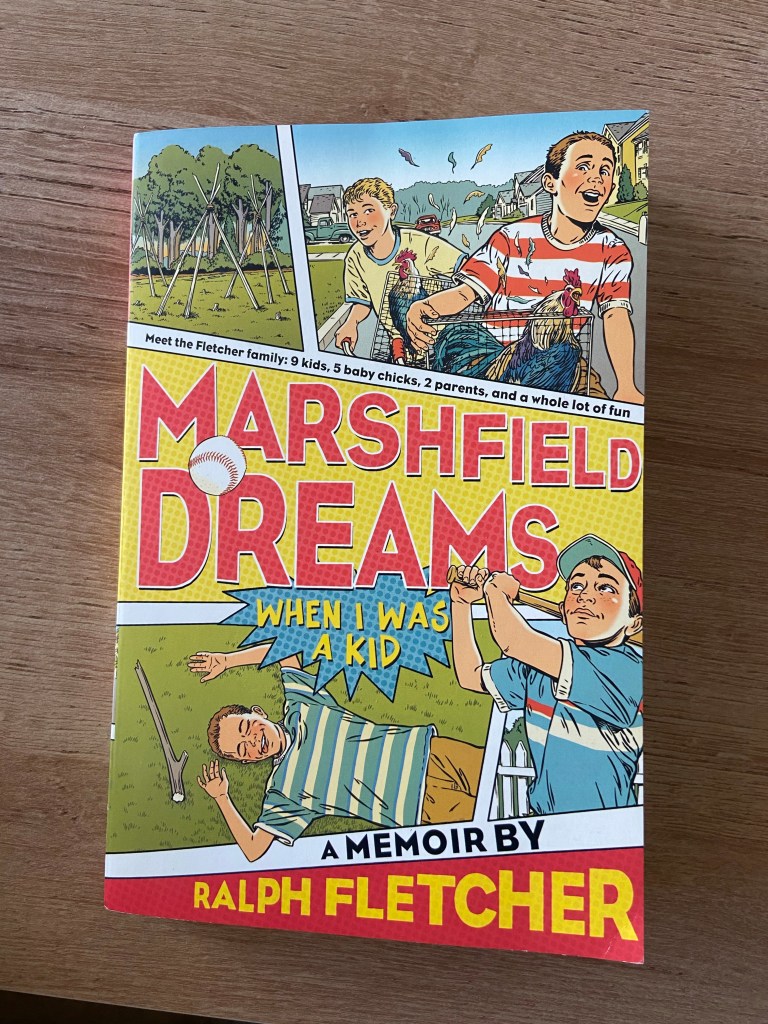
It’s 7:29 am and I’m waiting for Ana to pick me up to take us to school. I also just finished Marshfield Dreams by Ralph Fletcher and I feel like I’m floating.
What a fantastic book. I read it quickly, within a couple of nights curled up in bed and this morning while eating my yogurt with fruit and homemade granola. Ralph’s stories of his childhood in Marshfield made me laugh, smile, and gasp from sudden surprise. He writes in such a clear, easy way, that you almost don’t realize when you’ve gotten to a poignant moment until you’re in it, and then — shuuup — quick inhale of breath, and a slow breathing out as you savor the mixture of beauty and sadness.
Something else this book did was make me feel that I can write anything. I can’t wait to share this book (and any writing inspired by it!) with the world.
At the launch of every new writing unit, I feel a wave of anticipation that teeters dangerously between excitement and overwhelm.
Excitement because it’s a new genre, and there are so many great tools and resources, and I have some new systems I want to put in place, and this time I swear I’ll be more intentional with picking the mentor texts and modeling in my own writer’s notebook.
Overwhelm because there are TOOMANY great tools and resources! And how will I teach all the new systems and still give writers time to write? And how will I get these on-demands graded in time? And, oh god, there are so many things to teach them, where do I even begin?
So I’m taking a break from the grading to write this post and remind myself to BREATHE.
To just take it “bird by bird,” as Anne Lamott says. The unit will pick up speed as the writers step into it, and I will know how to sift through the tools and use what I need once I see what they’re producing.
I am leaning towards excitement as I gear up for tomorrow, for two main reasons.
First, Consuelo and I have decided to split the class in half for reader’s and writer’s workshop, aligned with their book clubs and their writing partners. This way we can take advantage of both instructors and get a 12:1 student:teacher ratio. We’ll also have more time and freedom to conference with students, which I’m really excited about. After attending the TCRWP’s Virtual Saturday Reunion, as well as Ana’s last WW meeting on the teacher work day, I’ve got so many ideas about how to make small groups work better for both me and the kids. That’s a big goal for me as a teacher this unit.
Additionally, as I was preparing a “This Unit’s Mini-Lessons” anchor chart, an idea Ana and I had for student accountability, Consuelo gave me the idea to make small cards to give to the students for each teaching point. That way, it could live on the anchor chart AND in the students’ notebook for reference.
Here are how the first three lessons’ cards turned out. I’m looking forward to seeing how this helps cement the teaching point for each writer!
It’s important for the card to include a visual, and I also added in which stage of the writing process it applies to. I’m hoping this helps empower students when we confer!
As I finish grading the last of the end-of-unit narrative on-demands, I’m smiling. Aside from the evident creativity, it’s so clear to me that these writers grew a ton, especially the ones who took the mini-lesson strategies to heart and/or who I was able to meet with often throughout the unit.
Of course, on-demand data is just one snapshot assessment. I know, for instance, that one very capable student spent 20 minutes sitting there thinking, and only about 5 minutes writing, after some gentle (and then not-so-gentle) nudging to put pen to paper.
That said, I’m pleased with the overall data: it shows 17 out of 23 students made strides, demonstrating half a year’s growth to almost a year and a half’s growth for some. While 5 students’ scores went down, and one student’s stayed the same, the overall class score of 14.09 (beginning of 4th grade) jumped to 18.29 (end of 4th grade).
How’d we do with the goals?
Focused short story arcs? — Some of the published pieces were focused, others not so much, but most of the on-demands were clear and to the point.
Transition words? — The on-demand data shows a jump from a 0.63 average to a 1.48 average, meaning growth of about one year. The student who was smack dab in the middle when I thin sliced the August on-demand data grew tremendously in this area, as well as with show, don’t tell.
Show, Don’t Tell — The majority of on-demands included dialogue, most of which had approximations of correct punctuation (i.e. quotation marks, but perhaps no commas, or correctly punctuated, but not starting a new paragraph each time a new character speaks). There also was much more vivid description. The on-demand data supports a year’s growth in “elaboration,” with the craft skills lagging behind. That’ll be a goal for the next narrative unit this year.
Documenting & Celebrating
Incorporating feedback from their first writing celebration, we decided to make this one “intimate” —aka. they just shared their stories with each other, and we only invited Male and Angie to observe. There were no feedback sheets, no stories laid out. They each took their printed stories, protected in a plastic sleeve, somewhere in the room where they could read aloud or listen to a friend’s. The engagement was high. It was very joyous and sweet.
Later in the day, after a math test and during quiet time, they continued to return to the writing center to grab another friend’s piece to read.
Writers wanting to read other writers’ stories, even when it’s not Writer’s Workshop? Yup. I’ll take it.
My weekly reflection got postponed a bit from our days off for Hurricane Ian. It didn’t end up hitting Miami too badly (thankfully), so it mostly gave us teachers and the students a mini vacation to rest and recuperate. Which was much needed, especially as I was nursing a cold at the time.
So sessions 7 and 8 were pushed to last week, which was completed with two mini-lessons on leads and setting. I had one successful and one not-so-successful small group, and a bunch of successful conferences.
My plan this week is to finish conferencing on Monday and Tuesday with the students I didn’t get to last week, and then offer a couple small group sessions on Wednesday and Thursday where students can “sign-up” to get support with revision strategies.
Next week, students will be editing and publishing, and I’ve offered typing as an option for their final drafts. I think for small groups/conferencing, I’ll do another “sign-up” but this time with editing conventions (like, punctuating dialogue correctly, or reading your piece out loud to catch run-on sentences).
The week after that, we’ll finish up with our intimate class celebration, a more public celebration, and our narrative on-demand to see the growth from the beginning of the year.
This is a short blog post, but it’s been a busy weekend. I hope to have a more thorough post by the end of the unit!




 Writing With Abandon